
Technical specifications and warranty references checked 11 September 2026. Confirm the model and terms supplied with your quote.
Sungrow is worth shortlisting for Australian homes comparing solar-only and hybrid inverter options. The choice comes down to the exact model, installed price and whether you want storage or blackout protection.
After 25+ years installing solar across Port Macquarie and the Mid North Coast, our Sungrow inverter range comes down to value, battery plans and the quality of the installation. The hardware is worth shortlisting, but the exact model matters more than the brand badge.
The review covers the SG series (string inverters), the SH series (hybrid inverters), Sungrow battery systems, backup capability, common monitoring and operating issues, and which homes each product suits best on the Mid North Coast.
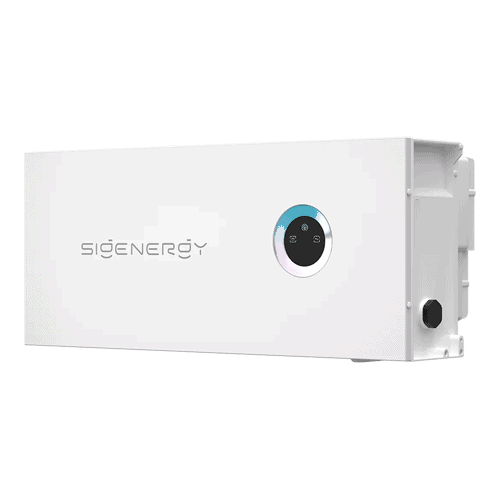
Quick context: SolaXs is a local solar installer based in Port Macquarie with 25+ years of experience. We install Sungrow, Fronius inverters, Goodwe inverters and Sigenergy systems across the Mid North Coast. For a tailored quote, explore our residential solar installation service and home solar battery options.
Sungrow at a Glance
Sungrow was founded in 1997 and has grown into one of the world’s largest inverter manufacturers by shipped capacity. The company set up an Australian subsidiary with local warehousing and a technical support team. That Australian presence matters when warranty claims involve imported components, but it does not replace the installer’s role in fault diagnosis and site attendance.
Before buying, ask who will diagnose faults, lodge warranty claims and attend your property. A local installer who remains involved after commissioning is part of the value of the system.
In residential solar, Sungrow makes two main product lines. The SG series is a traditional grid-tied string inverter for solar-only systems. The SH series is a hybrid inverter that works with solar, a battery, and the grid, with the option to back up essential circuits during an outage.
- SG series: Grid-tied string inverters in 3, 5, 6, 8, 10 and 12kW sizes
- SH series: Hybrid inverters from 3kW single-phase to 25kW three-phase
- Battery pairing: SBR and SBH compatibility depends on the hybrid model and battery stack. Check the Australian compatibility table before ordering.
- Microinverters: Sungrow also offers microinverters for panel-level conversion, suited to roofs where shading or multiple orientations make a string inverter impractical. These are a different product category from the SG and SH units reviewed below.
- Monitoring: iSolarCloud app and web portal
- Warranty: Eligible residential inverters have a 10-year limited warranty; accessories and batteries have separate terms.
Sungrow SG Series Inverter Review
Sungrow string inverter efficiency: what does the datasheet say?
A single 98.6% efficiency rating does not apply to every Sungrow string inverter. The Australian SG5.0RS-ADA / SG8.0RS / SG10RS datasheet gives 97.8% maximum efficiency, with European weighted efficiency of 96.9%, 97.3% and 97.4% respectively.
Use the model number and regional datasheet on your quote. Peak efficiency is a best-case conversion figure; weighted efficiency accounts for different operating loads, and neither is a promise of annual solar yield.
The SG series is the workhorse for homes that are only installing solar with no battery now or later. It covers common Australian residential sizes well, and the pricing sits below Fronius inverters while delivering similar efficiency on paper.
What it does well
- Efficiency: Compare the exact model datasheet, not a brand-wide percentage. The Australian SG5.0RS-ADA, SG8.0RS and SG10RS datasheet lists 97.8% maximum efficiency.
- Panel oversizing: The same datasheet recommends up to 7.5kWp of panels for the SG5.0RS-ADA. The installer must also check string voltage, current limits and connection requirements; the panel-power figure alone does not establish a compliant design.
- Three MPPTs on these models: SG5.0RS-ADA, SG8.0RS and SG10RS have three independent trackers. That helps with separate roof orientations, provided each string meets its operating limits.
- Quiet operation: These RS models use natural cooling, so there is no cooling fan to cycle on. Other SG models use different cooling systems.
- Monitoring connection: These models support WLAN and Ethernet. Choose the connection method around the signal at the inverter location.
- Arc fault detection: The listed RS models include AFCI. This protection does not replace correct DC cable installation, sound connectors or fault investigation.
Where it falls short
- No direct battery connection: SG models do not provide the SH range’s DC battery input. Adding storage later may still be possible with a separately designed AC-coupled battery system; our guide to adding a battery to an existing solar system covers what that involves. Compare that upgrade path with buying a hybrid now.
- Monitoring UI: iSolarCloud works fine but feels slightly dated compared with Fronius Solar.web
- Physical size: Chunkier than some competitors, worth checking wall space on smaller installs
Looking at a 6.6kW solar system or 10kW solar system? The SG series is a strong choice for solar-only homes where the installed price suits the budget.
Sungrow SH Series Hybrid Inverter Review
Can a Sungrow SH series hybrid inverter operate without a battery?
Yes, supported SH models can run as grid-connected solar inverters before a battery is installed. The SH8.0RS/SH10RS user manual, section 2.6 explicitly labels the battery optional; section 6.8 warns that backup will not work reliably without one.
Battery-optional operation lets you install solar now and add compatible storage later. Have the installer confirm battery-free commissioning for the exact model, and leave suitable space and cable routes for storage.
- With the grid available, solar can supply household loads and export within your approved limit.
- Without a battery, there is no stored solar energy to use after sunset.
- Do not buy a battery-free installation on the assumption it will provide dependable blackout power.
The SH range supports approved Sungrow battery combinations. Compatibility and commissioning requirements vary by model, so the quote should name both the inverter and the battery stack.
The range includes single-phase SH-RS models and three-phase SH-RT and SH-T models. SH15T, SH20T and SH25T belong to the T family, not SH-RT; Sungrow Australia lists their separate installation documents.
What it does well
- Battery pairing: Works natively with Sungrow SBR (modular lithium iron phosphate) and the newer SBH series. Same vendor means cleaner commissioning and a single warranty contact point
- Backup capability: Compatible SH models have a backup output. The circuits and any additional switching equipment must be designed for the particular inverter and property.
- Three-phase option: SH-RT and SH-T offer different output and backup ratings. Our comparison of three-phase solar inverters explains the choice for larger homes.
- VPP compatibility: Check your proposed inverter and battery combination against the chosen provider’s supported equipment before signing up. Our guide to NSW battery incentives explains what to check.
- Export control: The installer must configure metering and export limits to match your network connection approval. Do not assume every model supports every dynamic export arrangement.
- Grid charging for time-of-use tariffs: Supported SH models can charge the battery from the grid during off-peak periods, then discharge during peak pricing. The inverter needs the correct metering setup and the network operator’s approval. Some households pair this with EV charger installation to shift both vehicle and battery charging to off-peak rates.
Where it falls short
- Backup wiring is an extra job: Selected circuits are often the practical choice, although some models support whole-home backup. Switchboard work and the home’s maximum loads still need assessment.
- Battery selection: Sungrow’s Australian approved-battery declaration limits the listed SH-RS, SH-RT and SH15T to SH25T hybrids to Sungrow SBR/SBH high-voltage batteries. Older SH5K models have different compatibility.
- Model-specific efficiency: The SH5.0RS/SH6.0RS datasheet lists 97.7% maximum efficiency. Compare equivalent hybrid models and operating conditions before treating a small percentage difference as a buying reason.
For homes choosing a solar battery for their home, an SH hybrid paired with a compatible SBR or SBH stack is worth considering. Our solar batteries page explains the installation options; check federal battery rebate eligibility for the installation date before accepting a quote.
Sungrow Battery Systems: SBR and SBH
Sungrow offers two residential battery lines for compatible SH hybrid systems. Their different module sizes affect how closely the stack can match your storage needs.
- SBR series: Modular lithium iron phosphate (LFP) batteries using 3.2kWh modules. The Australian range includes 6.4 to 25.6kWh stacks, but minimum and maximum stack sizes depend on the inverter. LFP chemistry does not make a battery immune to fire or damage.
- SBH series: A high-voltage LFP battery using 5kWh modules. The Australian SBH range includes 15 to 40kWh stacks; select a permitted combination rather than assuming every size works with every SH inverter.
Both battery lines require a compatible hybrid inverter and installation to the relevant wiring requirements. For a deeper look at capacity, cycle life, and how they compare to BYD Battery-Box and Tesla Powerwall, see our Sungrow battery review and our comparison of the best solar batteries for Australian homes.
| Specification | SBR (3.2kWh modules) | SBH (high-voltage) |
|---|---|---|
| Chemistry | LFP | LFP |
| Usable capacity range | 6.4 to 25.6kWh (model-dependent) | 15 to 40kWh (model-dependent) |
| Module size | 3.2kWh | 5kWh |
| Warranty | 10 years | 10 years |
| Expandable | Yes (add modules) | Yes (add modules) |
The May 2026 Australian battery cross-reference chart sets out permitted combinations and stack restrictions. A cycle-life headline is not a warranty: read the applicable battery terms for capacity retention, temperature conditions and monitoring requirements.
For current battery pricing in Australia, see our solar battery cost guide.
Backup and Blackout Protection
One of the most common questions we get about the SH hybrid is what happens during a power outage. The short answer: it depends on how the system is wired.
- Essential circuit backup: A correctly wired backup output can supply selected loads such as lights, the fridge and the internet router. Check the combined running load and motor starting demand against both inverter and battery limits.
- Full-home backup: Some single-phase models do support it. Sungrow’s SH8.0RS/SH10RS whole-home backup guide shows the wiring arrangements; whole-home connection does not mean every appliance can run together during an outage.
- Switchover time: The SH5.0RS/SH6.0RS datasheet lists a backup switch time below 10 milliseconds. Check the model’s rating and any sensitive equipment’s requirements rather than assuming uninterrupted operation.
- Solar charging during outage: The SH can continue generating from panels and charging the battery during a blackout, extending your backup window beyond just the stored battery capacity
Backup capability can add switchboard and wiring costs. Ask for a circuit list, continuous backup rating, starting-load allowance and reserve battery setting in the quote. Request a quote that includes backup.
iSolarCloud Monitoring
Compatible Sungrow inverters connect to iSolarCloud for generation history and fault reporting. Household consumption and grid import/export readings need the appropriate meter or CT installation; battery data appears when storage is fitted.
- Connection: Check which communication module comes with the quoted model. WLAN or Ethernet support does not mean every inverter has built-in WiFi.
- App features: Live power flow, daily/monthly/yearly generation history, battery charge level, fault alerts
- Remote diagnostics: We can access your system remotely through iSolarCloud if you report an issue, which speeds up troubleshooting before sending a technician
- Known limitation: The app interface is functional but not as polished as Fronius Solar.web. Some owners report occasional WiFi dropouts that require a router restart or a reconnection via the app
If you are having trouble getting your Sungrow online, our Sungrow WiFi setup guide walks through the connection process step by step.
Cybersecurity and connected inverters
Any internet-connected inverter carries some exposure. In 2020, a security researcher publicly disclosed a vulnerability in an older Sungrow communication module, and Sungrow released a firmware patch. Most inverter reviews skip this topic entirely, so the fact that Sungrow has been publicly tested and responded with a fix is worth noting when comparing brands.
Keep your iSolarCloud account credentials separate from other logins, apply firmware updates offered through your installer, and remove remote access you no longer use.
Common Sungrow Problems and How We Handle Them
If your installer recommends a restart, follow the model-specific instructions for how to reset a Sungrow inverter and the shutdown labels fitted to your system. If you need to safely turn off your solar inverter before a technician arrives, follow the DC and AC isolation sequence on your system’s shutdown procedure label.
Persistent inverter faults need professional solar maintenance and repairs, especially when generation has stopped or a fault returns after the installer’s recommended checks.
An offline app does not necessarily mean your inverter has stopped generating. Start by distinguishing a monitoring fault from an electrical fault, then give your installer the model, serial number and fault history.
- WiFi connectivity drops: Check router availability and signal strength at the inverter. Sungrow’s monitoring support documents cover connection issues and communication modules.
- Noise on hot days: Cooling varies by model. The SG RS units discussed above and SH5.0RS/SH6.0RS use natural cooling; a persistent new buzz, vibration or alarm should be reported rather than dismissed as fan noise.
- Firmware or reporting issues: Record when the issue began and contact the installer if reports remain incomplete or a fault persists.
- Support response times: Ask who owns the fault investigation and warranty claim. If SolaXs supplied the system, contact our team with the fault details so we can establish the next step.
If your Sungrow inverter is showing a fault code or red light, see our inverter troubleshooting guide or our guide on how to check if your solar inverter is working. Before calling an electrician, check whether your inverter is actually turned on and producing power.
Sungrow Warranty: What You Actually Get
The Australian inverter warranty terms give listed eligible models 10 years from installation, capped at 11 years from manufacture. The April 2020 condition concerns manufacture and installation for listed units, not simply registration.
- Keep your records: Retain the invoice, serial number and commissioning report so the manufacturer can establish the applicable warranty and installation date.
- What it covers: Defects in materials and workmanship, with repair or replacement at the manufacturer’s discretion. Accessories have a separate, shorter warranty.
- Costs and exclusions: Installer service rebates are not a promise that all labour, travel or switchboard alterations are covered. Incorrect installation and insufficient ventilation are among the exclusions.
- Extensions: Confirm availability and price for your model; the terms allow purchase during the standard warranty period.
- Claim process: Contact the original installer for troubleshooting, then lodge supporting documents through the manufacturer’s warranty claim service. Australian Consumer Law rights continue alongside the written warranty.
If your inverter is out of warranty and needs replacing, see our guide on solar inverter replacement costs.
How Sungrow Compares to Fronius and Goodwe
Sungrow, Fronius and Goodwe all offer residential options. Use the comparison below as a quote checklist: features and warranty conditions change between models within each brand.
| Feature | Sungrow | Fronius | Goodwe |
|---|---|---|---|
| Efficiency comparison | Use exact SG or SH datasheet | Use exact Primo or GEN24 datasheet | Use exact string or hybrid datasheet |
| Warranty comparison | Check model, accessories and exclusions | Check model and registration terms | Check model and installation terms |
| Support to confirm | Who diagnoses and lodges the claim? | Who diagnoses and lodges the claim? | Who diagnoses and lodges the claim? |
| Monitoring UI | iSolarCloud, functional | Solar.web, best in class | SEMS, functional |
| Hybrid/battery path | Native (SH + SBR/SBH) | GEN24 + BYD | EH/ES + Goodwe Lynx batteries |
| Backup capability | Model, battery and wiring dependent | Model, battery and wiring dependent | Model, battery and wiring dependent |
| Pricing (typical 5kW) | Mid | Premium | Value |
| Best suited for | Value hybrid + battery | Premium single and 3-phase | Budget-sensitive installs |
Check the exact proposed model on the Clean Energy Council approved-inverter list rather than treating approval as brand-wide. For a deeper comparison, see our Sungrow vs Fronius head-to-head, Goodwe vs Fronius comparison and Goodwe inverter review.
Which Sungrow Suits Which System Size
If you are keeping existing panels, planning solar system upgrades starts with checking their string voltage and current against the replacement inverter, plus your network approval.
Pairing an inverter to the right system size matters both for performance and for staying within Clean Energy Council compliance. Over-specifying costs money; under-specifying wastes panel output on clipping.
- For a 6.6kW solar system (see 6.6kW solar system pricing), SG5.0RS-ADA (5kW SG) works well with a typical 6.6kW array
- For an 8kW solar system, SG6.0RS or SH6.0RS depending on battery plans
- For a 10kW solar system, SG8.0RS or SH8.0RS single-phase, or a three-phase SG10RT or SH10RT for larger homes
- For a 13.2kW solar system, SG10RT or SH10RT three-phase, paired with Sungrow SBR/SBH battery if storage is going in
Not sure what size solar system you need? Our team can assess your usage and roof space to recommend the right fit.
Sungrow on the Mid North Coast
Summer heat, coastal humidity and storms make mounting position important on the Mid North Coast. An IP rating describes protection against dust and water ingress; it is not a guarantee against salt corrosion, flooding or overheating.
- Coastal positioning: Mount under eaves or on a shaded wall where possible. This applies to any inverter, not just Sungrow
- Heat management: Follow the model’s clearance and shading requirements. Derating depends on the inverter and operating conditions.
- Essential Energy connection: Check the exact model, export arrangement and approval conditions for your property before installation.
- Parts availability: Ask about replacement-unit lead times when a fault is diagnosed. Do not assume same-day dispatch.
- Local support: Keep your installation and warranty records accessible so another qualified installer can identify the equipment if your original supplier is unavailable.
For homes in Port Macquarie and across the Mid North Coast, compare Sungrow against your roof layout, household loads and storage plans. Standard 6.6kW and 10kW systems can use different inverter sizes, so ask for the exact model and the reason for that pairing.
Is Sungrow the Right Inverter for Your Home
- Confirm the model number and approved battery combinations.
- Ask which circuits remain powered during an outage.
- Compare the complete installed price and who handles faults.
Sungrow is worth comparing for solar-only installations and compatible hybrid battery systems. Ask for equivalent quotes so you can compare installed price, monitoring and backup capability. Fronius and Goodwe also offer options for different budgets and storage plans.
Compare solar inverter costs and our guide to the best solar inverters in Australia. If you are new to solar, start with how a solar inverter works.
FAQ: Sungrow Inverter Questions Answered
Is Sungrow a good inverter brand?
Yes, Sungrow is worth shortlisting for residential solar, particularly where a compatible hybrid and battery package suits the home. Assess the exact model, written warranty and installer support rather than relying on a brand-wide reliability claim.
How long do Sungrow inverters last?
Sungrow does not guarantee a single service life for every inverter. Eligible models have a 10-year limited warranty, but lifespan also depends on installation, temperature and operating conditions; ongoing solar system maintenance helps identify developing faults.
What are common problems with Sungrow inverters?
Monitoring dropouts, fault alarms and unexpected noise need different checks. Establish whether generation has actually stopped, record the fault details and ask the installer to investigate persistent issues.
Can Sungrow inverters work during a blackout?
A suitably designed SH hybrid system with a compatible battery can supply backup circuits during an outage. Requirements vary by model; a separate branded backup box is not a universal requirement, and SG grid-tied units do not provide standalone backup.
Sungrow vs Fronius: which is better?
Compare the proposed Fronius and Sungrow models for monitoring, backup output and installed price. Cooling is model-specific; Fronius is not universally fanless.
For a budget-conscious hybrid system, Sungrow is usually the better fit. For a premium solar-only install, Fronius is hard to beat. See our Sungrow vs Fronius comparison for the full breakdown.
Is Sungrow better than Goodwe?
Sungrow and Goodwe both offer residential string and hybrid options. Compare two actual quotes with the same panel capacity, battery capacity and backup scope; brand-wide price or reliability rankings can hide differences in the equipment offered.
Is the Sungrow battery worth it?
For homes installing an SH hybrid inverter, a Sungrow SBR or SBH battery is an option to price alongside the compatible inverter. The single-vendor approach simplifies warranty and commissioning. Whether a battery is worth it overall depends on your electricity usage, tariff structure, and whether you can access current battery rebates.
Which Sungrow inverter is best for a 6.6kW system?
The SG5.0RS-ADA (5kW grid-tied) or SH5.0RS (5kW hybrid) are the standard pairings for a 6.6kW solar system. Choose the SH if you plan to add a battery within the next few years.
How does Sungrow monitoring work?
Sungrow inverters connect to the iSolarCloud app via WiFi or Ethernet. The app shows real-time generation, consumption, battery state, and export data. Your installer can also access the system remotely for diagnostics.
See our Sungrow WiFi setup guide if you need help connecting.
Are Sungrow inverters compatible with other batteries?
For the SH-RS, SH-RT and SH15T to SH25T models covered by Sungrow’s Australian declaration, use approved SBR/SBH combinations. Older SH5K inverters have a different battery list, so advice for those units does not establish compatibility for a new hybrid.
Is Sungrow safe?
Check approval and safety features for the exact model. AFCI is listed on the SG RS datasheet discussed above, but should not be assumed for every SG or SH variant; protective features do not eliminate the need for correct installation.
For connected equipment, keep firmware maintained through the installer, secure your monitoring account and home network, and remove remote access that is no longer needed. An electrical approval is not a guarantee of cybersecurity.
Can Sungrow inverters work off-grid?
Some specified combinations support permanent off-grid use, but this is not a blanket capability of every SH model. Sungrow’s Australian warranty lists an off-grid category for SH5.0RS/SH6.0RS with SBR160 or larger, subject to its conditions; have the installer confirm the complete battery, generator and monitoring design in writing.
For a tailored recommendation on which Sungrow inverter and battery suits your home, request a free quote from SolaXs. We are a local solar installer based in Port Macquarie with 25+ years of local solar experience across the Mid North Coast.