
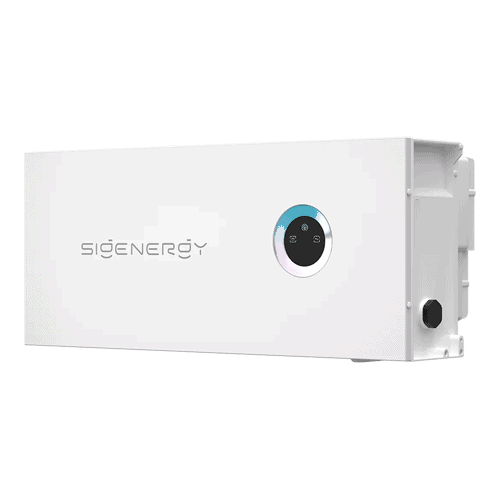
Picking between a GoodWe and a Fronius inverter is one of the most common decisions Australian homeowners face when going solar. Both brands are CEC-approved, both have local support teams, and both show up on nearly every installer’s quote.
They sit at different price points and suit different setups. This GoodWe vs Fronius inverter comparison breaks down the real differences so you can pick the right one for your roof, your budget, and your plans for batteries down the track.
SolaXs installs both GoodWe and Fronius inverters across the Mid North Coast. Not sure which suits your home? Get in touch for a free quote and we’ll recommend the right fit.
GoodWe vs Fronius Inverter at a Glance
Before getting into the detail, here is a side-by-side snapshot of where each brand sits. These figures cover the most popular residential models in Australia.
| GoodWe (MS Series) | Fronius (Gen24) | |
|---|---|---|
| Country of origin | China | Austria |
| Price range (5-10kW) | $1,000 to $2,500 | $2,200 to $5,700 |
| Peak efficiency | 97.7% | 98.1% |
| Standard warranty | 10 years (registered) | 5 + 5 years (registered) |
| MPPTs (10kW model) | 3 | 2 |
| Hybrid option | Yes (EH/BH/EHB series) | Yes (Gen24 Plus) |
| Backup power | Yes (hybrid models with battery) | Yes (PV Point without battery, full backup with battery) |
| Noise level | Under 25 dB(A) | Under 42 dB(A) |
| Monitoring | SEMS Portal + app | Solar.web + app |
| Battery ready | Wide compatibility | BYD / Fronius batteries |
| Single and three-phase | Both available | Both available (Primo / Symo) |
The price gap stands out straight away. A GoodWe 10kW inverter runs around $1,300 to $1,800, while a comparable Fronius Gen24 sits between $3,500 and $5,700. That is a meaningful difference on a residential install.
Where GoodWe Wins
Price
This is the obvious one. A GoodWe inverter costs roughly $800 to $1,500 less than the equivalent Fronius model.
For a 6.6kW system where the budget matters, that saving can go towards extra panels or a battery later.
Battery Flexibility
GoodWe hybrid inverters (the EH, BH, and EHB series) work with a wide range of third-party batteries. If you want to pair your inverter with a BYD, Pylontech, or another popular battery brand, GoodWe gives you more options than most competitors.
This matters on the Mid North Coast where battery demand has jumped thanks to the federal battery rebate and NSW incentives. Flexibility means you can shop around for the best battery deal when you are ready to add storage.
Three MPPTs
The GoodWe MS series comes with three maximum power point trackers. That is useful when panels sit on two or three different roof faces, which is common on Mid North Coast homes with hip roofs or partial shading from trees.
Fronius residential models top out at two MPPTs. If your roof layout is complicated, three trackers can squeeze more production from the same number of panels.
Noise
GoodWe inverters use passive cooling and run at under 25 dB(A), which is quieter than a whisper. Fronius inverters use active fan cooling and sit closer to 42 dB(A). If your inverter is going on a bedroom wall, that difference matters.
- Lower upfront cost by $800 to $1,500
- Works with more battery brands
- Three MPPTs for complex roof layouts
- Passive cooling runs quieter than Fronius
Where Fronius Wins
Build Quality and Track Record
Fronius is an Austrian manufacturer that has been making inverters since the 1990s. Their build quality is hard to argue with.
In the SolarQuotes installer survey, Fronius has won gold five years running, with 26% of the vote in 2025. Fronius inverters tend to have lower failure rates over 10+ years compared to most competitors. If you plan to keep your system for 20 years without worrying about it, Fronius is the safer bet.
Heat Performance
Australian summers push inverters hard. Fronius handles heat better than most brands thanks to active cooling and a heavier, sturdier chassis. GoodWe inverters can derate (reduce output) earlier on extremely hot days.
On the Mid North Coast, summer temperatures regularly hit the high 30s. A Fronius will hold its rated output longer on those peak days, which is exactly when you want maximum solar production.
Monitoring Platform
Fronius Solar.web is one of the best monitoring platforms available. It gives you detailed production data, consumption tracking, and system alerts in a clean interface.
GoodWe’s SEMS portal does the job but feels less polished by comparison.
Resale Value
A Fronius inverter on a home adds more perceived value at sale time. Buyers and their electricians recognise the brand. If you are selling within 10 years, a Fronius system looks better on the inspection report.
- Austrian engineering with lower long-term failure rates
- Handles extreme heat without derating as early
- Better monitoring through Solar.web
- Stronger brand recognition at resale
Backup Power and Blackout Protection
Blackout protection is increasingly important for Mid North Coast homeowners, especially during storm season. Both brands offer backup options, but they work differently.
Fronius Gen24 Plus inverters include a built-in feature called PV Point. It supplies up to 3 kW to a dedicated socket during a power outage, and it works without a battery as long as the sun is shining. Add a compatible battery and the Gen24 Plus can provide full-home backup, including three-phase loads like heat pumps.
GoodWe hybrid inverters (the EHB series) provide backup power when paired with a battery. The switchover time is under 10 milliseconds, fast enough that most appliances stay running without resetting.
If backup power matters and you do not want a battery yet, Fronius is the clear pick. If you are adding a battery anyway, both brands handle blackouts well.
Which Inverter Suits Your Home
The right choice depends on your priorities. Here is a rough guide based on the setups we install across the Mid North Coast.
| Your situation | Our pick |
|---|---|
| Budget under $10,000 for a 6.6kW system | GoodWe |
| Planning to add a battery within 2 years | GoodWe (hybrid EHB series) |
| Want the lowest maintenance option for 15+ years | Fronius |
| Panels on 3+ roof faces or partial shading | GoodWe (3 MPPTs) |
| 10kW+ system and budget is not the main concern | Fronius Gen24 |
| Inverter location is near a bedroom window | GoodWe (quieter) |
| Blackout backup without a battery | Fronius Gen24 Plus (PV Point) |
| 13kW+ system with battery and backup power | Either (both have hybrid options) |
Most of our residential installs on the Mid North Coast use GoodWe. The price difference is hard to ignore, and the warranty is matched at 10 years. But for customers who want the absolute best and are happy to pay for it, Fronius is the answer.
Both brands are CEC-approved, which means they meet Australian safety and performance standards. You are not taking a risk with either choice. The question is whether the Fronius premium is worth it for your situation.
GoodWe vs Fronius Warranty and Support
Warranty used to be a clear win for Fronius, but GoodWe has closed the gap. Here is how they compare now.
- GoodWe: 10-year warranty when registered on their portal within 60 days of install. Extended warranties up to 25 years are available for an extra fee. Australian support office in Melbourne.
- Fronius: 5 + 5 warranty structure. The first five years cover parts, labour, and transport. The second five years cover parts only, with a set repair fee charged to the installer. Registration on Solar.web must happen within 24 months of installation. Paid extensions up to 20 years are available. Australian head office in Melbourne with local service partners.
Both brands have Australian offices, local spare parts, and local technicians. Neither requires shipping an inverter overseas for warranty claims. On the Mid North Coast, SolaXs handles warranty claims directly with both manufacturers.
The practical difference is that GoodWe gives you 10 years as the default (once registered), while Fronius splits it into two tiers. Make sure your installer registers the inverter for you.
What to check before your warranty starts:
- Confirm your installer has registered the inverter with the manufacturer
- Save your serial number and proof of purchase
- Set up monitoring (SEMS for GoodWe, Solar.web for Fronius) so faults are caught early
- Keep the area around the inverter clear for airflow
Common Questions About GoodWe and Fronius
Can I mix brands in one system?
Your inverter and panels do not need to be the same brand. A GoodWe inverter works fine with any CEC-approved panel, and the same goes for Fronius. Your installer will match the inverter capacity to your panel array regardless of brand.
Is GoodWe a budget brand?
Not anymore. GoodWe’s current models (the MS G3 and EHB series) compete with mid-tier and upper-tier inverters on performance. GoodWe has won seven consecutive TUV Rheinland quality awards and placed third in the 2025 SolarQuotes installer survey, behind Fronius and Sungrow.
Will my choice affect my solar rebate?
No. The federal STC rebate applies to the full solar system, not the inverter brand. Both GoodWe and Fronius are CEC-approved, so either qualifies.
What about Sungrow?
Sungrow sits between GoodWe and Fronius on price and is the second most installed brand in Australia. For this comparison, the GoodWe vs Fronius choice comes down to price vs premium quality, and Sungrow blurs the line without clearly winning in either camp.
How long does a solar inverter last?
Most residential inverters last 10 to 15 years. Premium brands like Fronius often exceed that. Both GoodWe and Fronius warrant their inverters for 10 years (when registered), but the actual lifespan depends on installation quality, ventilation, and how much heat the inverter is exposed to over time.
Do inverters work during a power outage?
Standard grid-tied inverters (including the GoodWe MS and Fronius Primo) shut down during a blackout for safety reasons. For backup power, you need either a Fronius Gen24 Plus with PV Point (works without a battery) or a GoodWe hybrid paired with a battery. See our backup power section above for the full comparison.
The Bottom Line
Both GoodWe and Fronius are solid inverters that will do the job for 10+ years. GoodWe is the smarter pick when budget matters or when you need battery flexibility and extra MPPTs. Fronius is the pick when you want the best build quality, built-in backup power, and do not mind paying for it.
SolaXs has installed hundreds of both across the Mid North Coast. We know which works best for different roof types, shading conditions, and battery plans. Get a free quote and we will recommend the right inverter for your home.
SolaXs is a CEC-accredited solar installer with 25+ years experience on the Mid North Coast. We install GoodWe, Fronius, and other leading brands. Contact us or call for a free assessment.
For more information, see the Clean Energy Council solar inverter buyers guide and the Australian Government Small-scale Renewable Energy Scheme.