
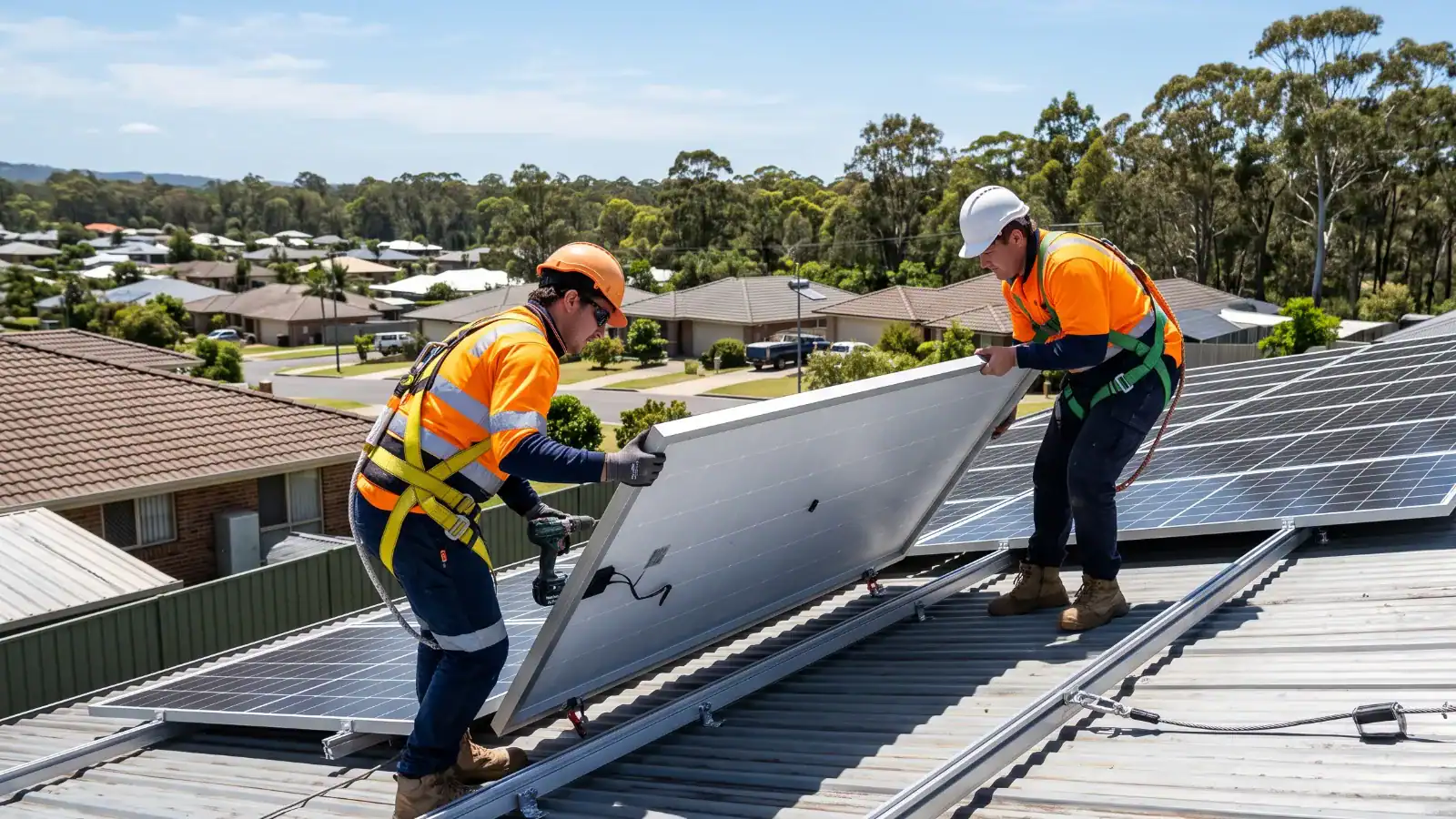
Canadian Solar panels are a solid mid-range choice for Australian homes, with a 25-year product warranty on specified TOPHiKu6 models. Check the model and applicable Australian warranty terms on your quote.
Canadian Solar has been making panels since its founding in 2001, but does its residential range suit Australian heat and coastal conditions?
This review covers Canadian Solar’s panel range, heat performance, warranty terms, and how they compare to Jinko and LONGi. We also look at what to consider if you are planning a residential solar installation on the Mid North Coast.
Already set on Canadian Solar? Check the Canadian Solar product range at SolaXs, then compare the system sizes below.
Who Is Canadian Solar?
Canadian Solar was founded in Canada. Its corporate overview lists a global manufacturing business and a NASDAQ listing under CSIQ.
The name does not tell you where a particular panel was made. The Australian CS6.2-48TM datasheet identifies China and Thailand as its manufacturing and assembly locations.
- Canadian-founded company with international operations
- Australian contact details published in its warranty
- Panel specifications vary by model, wattage and market
A long warranty is only useful if you can make a claim. Keep the model number, invoice and installation records, rather than relying on the brand name alone.
Canadian Solar Panel Range for Australian Homes
Canadian Solar’s TOPHiKu6 series uses N-type TOPCon cells. The name covers several designs, so a quote saying only “TOPHiKu6” leaves out information you need.
The Australian product library separates black-frame and all-black models, as well as single-glass and double-glass designs. All-black models offer a more uniform appearance.
- Ask for the complete model code and wattage.
- Check the dimensions against the proposed roof layout.
- Compare the quoted variant’s warranty and heat coefficient.
Canadian Solar 475W panels
The Canadian Solar CS6.2-48TM-475 is a 475W TOPHiKu6 panel with 23.8% module efficiency, according to its Australian datasheet. It measures 1,762 × 1,134 × 30mm and uses 144 TOPCon cell pieces.
The 475W rating is measured under standard test conditions, not a promise of continuous rooftop output. Fourteen panels total 6.65kW; twenty-one total 9.975kW; twenty-eight total 13.3kW, calculated by multiplying panel count by rated wattage.
These totals sit near common package labels, but your quote should state the actual array capacity and inverter rating separately. A higher-wattage panel is useful only if the proposed layout fits: roof hips, shaded sections and access paths can change how many modules you can install.
How Canadian Solar Panels Handle Australian Heat
Heat reduces solar panel output. The relevant temperature is the cell temperature, which differs from the weather forecast.
The CS6.2-48TM’s power temperature coefficient is -0.29%/°C. At a cell temperature of 65°C rather than the 25°C test reference, that implies about 11.6% less power from temperature alone, with other conditions unchanged.
| Brand / model | Cell type | Power temperature coefficient | Maximum efficiency in linked document |
|---|---|---|---|
| Canadian Solar TOPHiKu6 CS6.2-48TM | TOPCon | -0.29%/°C | 23.8% |
| Jinko Tiger Neo panels, JKM435-460N-54HL4R | TOPCon | -0.29%/°C | 23.02% |
| LONGi Hi-MO 7 66c | HPDC | -0.28%/°C | 23.1% |
| REC Alpha Pure-R | HJT | -0.24%/°C | 22.3% |
The table compares these specific models; other panels from the same brands may perform differently. LONGi positions Hi-MO 7 for utility projects, so it is a technology reference here, not a direct residential substitute.
A temperature coefficient closer to zero means less output lost as cells heat up, but does not establish annual savings by itself. Compare roof-specific yield estimates and installed prices; our review of REC panels for Australian homes explains that alternative in more detail.
Hail Resistance and Coastal Durability
The CS6.2-48TM datasheet reports testing with ice balls up to 45mm in diameter. This is a laboratory result, not a guarantee against storm damage.
- Check hail documentation for the exact supplied model.
- Have the installer confirm mounting and wind-load requirements.
- Ask about salt exposure for homes near Port Macquarie and Forster.
If you live near the coast, salt mist certification should be on your checklist. The installation manual reports IEC 61701 testing but warns that corrosion can still occur at mounting and grounding connections.
Ask about suitable fixings and the site’s exposure when getting your quote. Ongoing solar maintenance and repairs for coastal systems can address mounting or connection issues that panel certification alone cannot prevent.
Canadian Solar Warranty in Australia
The Australian TOPHiKu warranty gives specified black-frame CS6.2-48TM models a 25-year product warranty and 30-year performance warranty. Its performance limits are:
- At least 99% of labelled output after year one
- No more than 0.4% annual decline from years two to thirty
- At least 87.4% of labelled output at year thirty
Warranty fine print: Confirm the version applying to your purchase. The terms contain exclusions and generally leave removal and reinstallation costs with the buyer unless otherwise agreed in writing.
Keep your invoice and serial numbers. The warranty lists an Australian claims contact; your local SolaXs team can help you gather the installation information.
Product cover concerns defects; performance cover concerns measured panel output. Neither is a promise that your electricity bill or whole-system production will stay unchanged.
Pros and Cons of Canadian Solar Panels
Strengths
- Documented warranty: Named Australian models and a local claims contact
- Useful roof options: Black-frame and all-black variants
- Competitive efficiency: Compare the exact models in the table above
- Coastal documentation: Salt mist testing and installation guidance
Weaknesses
- Heat losses remain: Some alternatives have a lower-magnitude temperature coefficient
- Model names need care: Specifications cannot be applied across the whole range
- Warranty costs: Access and reinstallation may be extra
The best quote makes these trade-offs visible. Brand recognition alone tells you little about how the proposed system will perform on your roof.
For price comparisons, ask installers to quote the same array capacity and explain any differences in inverter, mounting hardware and switchboard work. A low panel price can be offset by other installation costs, so compare the complete installed quote and expected production rather than the module price alone.
What Size Canadian Solar System Suits Your Home?
System size depends on electricity usage, roof space, and budget. Use your bills and daytime consumption rather than an assumed local household average. A household that runs appliances while the sun is out has different needs from one that uses most of its electricity after sunset.
- A 6.6kW solar system package is a starting point for a smaller household’s quote.
- A 10kW solar system package offers more generation capacity for higher demand and future home solar batteries or EV charger installation.
- A 13.2kW solar system package is worth comparing for larger homes, pool pumps or substantial cooling demand.
Fourteen CS6.2-48TM panels occupy about 28 square metres, calculated from the module dimensions. Your roof needs additional room for gaps, setbacks and access, so usable roof shape matters as much as area.
Should You Choose Canadian Solar Panels?
Is Canadian Solar a good brand?
Yes, Canadian Solar is worth shortlisting for a home installation, provided the quoted model and installer suit your roof. Its published residential specifications and Australian warranty give you concrete terms to compare, without relying on reputation alone.
- Best for: Homeowners comparing mainstream panels with documented local support
- Think twice if: The quote omits the model code, mounting plan or applicable warranty
If you are on the Mid North Coast and want to see how Canadian Solar panels would work on your roof, get in touch with SolaXs for a no-obligation quote. Ask for the panel, system size and inverter pairing to be listed together. Bring your electricity bills and mention any planned electric vehicle, pool equipment or battery, so the proposed system reflects how you expect to use it.
Frequently Asked Questions
Are Canadian Solar panels made in China or Canada?
The reviewed CS6.2-48TM model lists China and Thailand in its datasheet. Check the supplied panel’s label rather than assuming Canadian manufacture from the name.
Are Canadian Solar panels Tier 1?
The manufacturer’s corporate overview reports BloombergNEF Tier 1 module status. Treat that as financing context; assess the actual panel through its specifications, warranty and installation design.
Which is better, Jinko or Canadian Solar?
There is no brand-wide winner. The Jinko model above and the reviewed TOPHiKu6 have the same heat coefficient; compare the exact quoted models, roof layout and installed price.
How long is the Canadian Solar warranty in Australia?
The specified black-frame model has 25-year product and 30-year performance cover under the Australian terms. Check the warranty that applies to your model and purchase date.
Do Canadian Solar panels work well in extreme heat?
They still generate power, but output falls as cells heat up. The CS6.2-48TD datasheet lists a -0.29%/°C power coefficient; ventilation and roof conditions also matter.
Are Canadian Solar panels good for coastal homes?
They can be suitable when the installation meets the manufacturer’s coastal requirements. The manual requires attention to corrosion protection and warns against constant sea-spray exposure.