
A solar system is one of those rare investments that mostly looks after itself. There are no moving parts, no fuel to top up, and no filters to change. But “low maintenance” doesn’t mean “no maintenance.” A bit of attention each year keeps your panels producing at their best for 25 years and beyond.
Here’s what you actually need to do to keep your solar system running well on the Mid North Coast.
How Often Do Solar Panels Need Cleaning?
For most homes in the Port Macquarie region, rain does a decent job of keeping panels clean. But it doesn’t wash away everything. Bird droppings, pollen, salt spray (for coastal homes), and leaf debris can build up and reduce output by 5 to 15 percent.
- Flat or low-pitch roofs: Clean every 6 months. Water pools and dirt accumulates faster without gravity to help.
- Steep roofs: Once a year is usually enough. Rain handles most of the cleaning.
- Near trees or the coast: Every 3 to 6 months. Leaf litter and salt spray are the main culprits.
- Rural or dusty areas: Check quarterly during dry spells.
Safety first: Never climb on your roof to clean panels yourself. Use a long-handled brush from the ground, or hire a professional panel cleaning service. Falls from roofs are one of the most common household injuries in Australia.
How to Clean Solar Panels
If you can safely reach your panels from the ground or a stable platform, cleaning is straightforward:
- Clean early in the morning or late afternoon when panels are cool. Spraying cold water on hot panels can cause thermal shock and microcracking.
- Use a garden hose to rinse off loose dirt and debris.
- For stubborn marks (bird droppings, sap), use a soft brush or sponge with plain water. No detergents, no pressure washers.
- Rinse again and let them air dry.
That’s it. No special equipment, no chemicals. If your panels are too high to reach safely, a professional clean once or twice a year costs $150 to $300 depending on system size.
Monitoring Your System Performance
Most modern inverters come with an app that lets you track daily, weekly, and monthly production. This is the single best maintenance tool you have, because a drop in output tells you something’s wrong before it becomes a bigger problem.
- Check weekly: Glance at your app to make sure production looks normal for the season.
- Compare month-to-month: If output drops noticeably compared to the same month last year, investigate.
- Look for flat-line days: A panel producing zero while others are generating usually means a wiring issue or a tripped isolator.
- Set up alerts: Most apps (Fronius, Goodwe, Sungrow) let you set notifications for faults or low production.
Tip: If your inverter isn’t connected to WiFi, you’re flying blind. Most connection issues are simple to fix. Check your inverter manual or contact SolaXs for help getting it online.
Annual Inspection Checklist
Once a year, do a visual check of your system (from the ground) or have your installer run through these items:
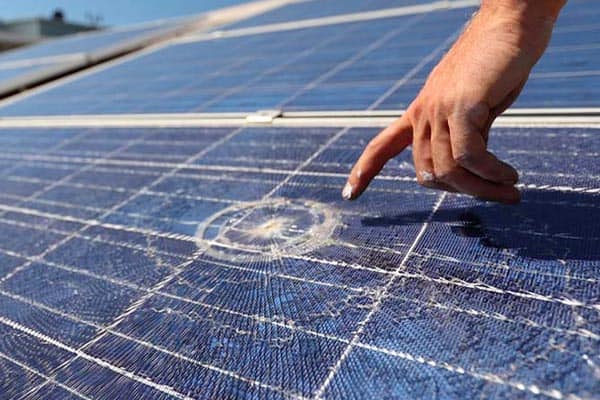
- Panel surface: Look for visible cracks, discolouration, or hot spots. Any browning or yellowing on a panel usually means a cell has failed.
- Frame and mounting: Check that panels haven’t shifted and mounting brackets look secure. Mid North Coast storms can loosen fittings over time.
- Wiring: Look for any exposed or damaged cables underneath the panels (visible from ground level on most installations).
- Inverter: Check the display or app for error codes. A solid green light usually means everything is working. Flashing or red lights need attention.
- Isolator switches: Make sure the DC and AC isolators haven’t tripped. If they have, don’t just flip them back on. Call a licensed electrician.
- Shading: Trees grow. What was a clear roof 3 years ago might now have branches casting shadows on your panels for part of the day.
Battery Maintenance
If you have a solar battery, it needs even less hands-on maintenance than panels. But there are a few things to keep an eye on:
- Temperature: Batteries perform best between 15 and 25 degrees Celsius. If your battery is in a garage that gets very hot in summer, consider ventilation or a fan.
- State of health: Your battery app will show its state of health (SOH), which indicates how much of the original capacity remains. Most lithium batteries retain 70 to 80 percent capacity after 10 years.
- Firmware updates: Battery manufacturers release firmware updates that can improve performance and fix bugs. Keep your system connected to the internet so updates apply automatically.
- Unusual noises: A quiet hum is normal. Clicking, buzzing, or loud fan noise is not. Report anything unusual to your installer.
Common Issues and What to Do
Most solar system problems are minor and easy to fix. Here are the ones we see most often:
| Issue | Likely Cause | What to Do |
|---|---|---|
| Output has dropped gradually | Dirty panels or new shading | Clean panels, trim trees |
| System producing nothing | Tripped isolator or inverter fault | Check isolator switches, call installer if inverter shows error |
| Inverter displaying error code | Grid fault, overheating, or wiring issue | Note the code, restart the inverter, call installer if it persists |
| One panel underperforming | Cracked cell, shading, or wiring fault | Contact installer for inspection |
| WiFi monitoring offline | Router change or inverter lost connection | Reconnect via inverter settings or app |
When to Call a Professional
DIY maintenance covers cleaning and monitoring. Anything electrical must be handled by a licensed professional. Call your installer or a CEC-accredited electrician if you notice:
- Burning smell or scorch marks near the inverter or panels
- Persistent error codes that don’t clear after a restart
- Significant output drop that isn’t explained by weather or shading
- Physical damage to panels after a storm
- Water ingress around the inverter or junction boxes
Seasonal Maintenance Calendar
Here’s a simple schedule to follow throughout the year on the Mid North Coast:
| Season | What to Do |
|---|---|
| Spring (Sep-Nov) | Clean panels after winter pollen season. Check for storm damage from spring winds. Trim any branches that have grown close to panels. |
| Summer (Dec-Feb) | Monitor output closely as this is peak production season. Check battery temperature if installed in a hot location. Watch for bird nesting under panels. |
| Autumn (Mar-May) | Clear leaf debris from panels and gutters near the array. Book your annual professional inspection before winter. |
| Winter (Jun-Aug) | Check monitoring app weekly as lower production makes faults harder to spot. Clean panels if rain has been scarce. |
Warranty and Insurance
Your solar system is covered by several warranties, and it pays to understand what’s included:
- Panel product warranty (10-25 years): Covers manufacturing defects, cracked cells, junction box failures, and delamination.
- Panel performance warranty (25-30 years): Guarantees minimum output (typically 84-92% at 25 years). If output drops below the guaranteed level, the manufacturer must repair or replace.
- Inverter warranty (5-25 years): Covers component failure. Most string inverters come with 10 years; microinverters typically offer 25 years.
- Installation warranty (5-10 years): Covers workmanship issues like leaking roof penetrations or loose wiring.
For home insurance, most policies cover solar panels as part of the building. Check with your insurer that your system is listed and covered for storm damage, hail, and fire. You may need to update your sum insured to include the system’s value.
SolaXs offers annual service checks for systems across the Port Macquarie region. With 25+ years in the solar industry, we know what to look for and can catch small issues before they become expensive ones. Get in touch to book a system health check.
Maintenance Schedule for Mid North Coast Systems
The climate on the Mid North Coast affects how often your system needs attention. Salt air near the coast accelerates corrosion, and pollen from surrounding bushland builds up on panels faster than in urban areas.
- Every 6 months: Visual inspection of panels for bird droppings, leaf buildup, or cracked glass. Rinse with a garden hose in the early morning when panels are cool.
- Every 12 months: Check inverter for error codes or warning lights. Clean any dust from ventilation grilles. Review your monitoring data for unexplained production drops.
- Every 2 years: Have a CEC-accredited installer inspect wiring, mounting brackets, and roof penetrations. Coastal homes should check for corrosion on aluminium frames.
- Every 5 years: Full system health check including isolator switches, earth bonding, and panel-level output testing. This catches problems before they become expensive.
SolaXs offers maintenance services for all solar systems on the Mid North Coast, regardless of who installed them.
For more information, see the Clean Energy Council buying solar guide and the Australian Government Small-scale Renewable Energy Scheme.