
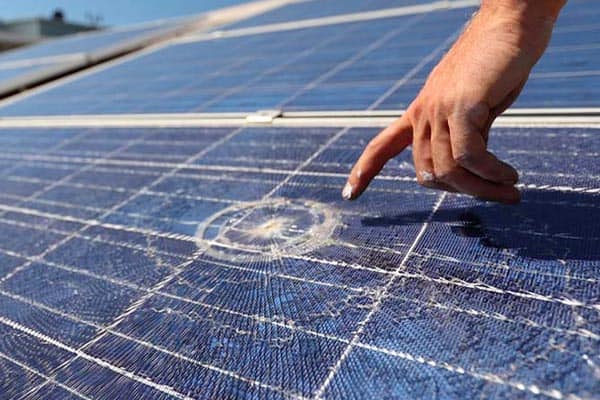
Most solar panel faults can be repaired without replacing your entire system.
A drop in output, an error code on your inverter, or visible damage to a panel does not automatically mean the whole system needs replacing. Solar panel repair covers a range of common issues, from cracked glass and hot spots to faulty wiring and failed bypass diodes.
The real question is whether repair makes financial sense compared to replacement. This guide walks through the most common solar panel faults, which ones are repairable, and when it is better to replace the affected panels entirely.
If your solar system is underperforming, contact the SolaXs team for a system health check. We service all brands on the Mid North Coast. You can also check out our Solar Care Plan for ongoing maintenance.
Common Solar Panel Faults That Need Repair
Solar panels have no moving parts, but they are exposed to weather, heat cycling, and wildlife for 25 years or more. Over that lifespan, several things can go wrong.
The most common faults that trigger a solar panel repair call are related to the panel glass, the internal cell connections, or the junction box on the back of the panel. Most of these faults show up as reduced output on your monitoring app before any visible damage appears.
Here are the faults a CEC-accredited installer will check for:
- Cracked glass: caused by hail, fallen branches, or thermal stress. Small cracks may not affect output immediately but allow moisture in over time
- Hot spots: one area of the panel overheats due to a failed bypass diode, shading, or a cracked cell underneath. Visible as a brown or yellowed patch
- Bypass diode failure: each panel has 2-3 bypass diodes in the junction box. A failed diode can cut output by up to a third, since each diode protects roughly one string of cells within the panel
- Delamination: the protective layers separate from the cells, allowing moisture and air in. Usually visible as bubbling or discolouration
- Snail trails: dark lines across the panel surface caused by moisture reacting with silver paste in microcracks. Cosmetic at first, but can worsen
- Wiring and connector faults: loose MC4 connectors, chewed wiring (possums are the main culprit on the Mid North Coast), or corroded junction boxes
- Faulty DC isolator switch: the isolator between the panels and the inverter can fail, arc, or melt. This is a fire risk and one of the most common issues flagged during Clean Energy Regulator inspections. A failed isolator needs immediate replacement by a licensed electrician
Inverter Failure: The Most Expensive Solar Repair
Inverter failure is the single most expensive repair on a residential solar system. String inverters typically last 5 to 12 years (based on manufacturer warranty periods), well short of the 25-year panel lifespan.
If your inverter dies outside warranty, it is worth knowing how much solar inverter replacement costs and whether upgrading to a hybrid inverter makes sense for future home solar battery compatibility.
Not every fault means the panel is finished. A diode replacement takes under an hour. A cracked panel with stable output might run for years with a sealant patch.
The decision depends on the type of damage and how much output has dropped.
Solar Panel Repair vs Replacement
The repair-or-replace decision comes down to three things: how much output the panel has lost, whether the fault will get worse, and whether the panel is still under warranty.
A panel producing at 80% or more of its rated output with a minor fault is almost always worth repairing. That 80% figure is the threshold most panel manufacturers use in their 25-year performance warranties, so anything above it is within the expected range.
A panel with widespread delamination or multiple cracked cells is better off replaced.
| Fault | Repair or replace? | Why |
|---|---|---|
| Single cracked cell, output stable | Repair | Seal the crack to prevent moisture ingress. Monitor output. |
| Bypass diode failure | Repair | Diode replacement restores full output. Quick and inexpensive. |
| Possum-chewed wiring | Repair | Rewire and install critter guard. Panel itself is fine. |
| Faulty DC isolator | Replace the isolator | Isolators are inexpensive. Replace to eliminate fire risk. |
| Widespread delamination | Replace | Cannot be fixed in the field. Moisture damage is progressive. |
| Multiple hot spots across panel | Replace | Indicates widespread cell damage. Repair cost approaches replacement cost. |
| Shattered glass, cells exposed | Replace | Structural integrity is gone. No safe or lasting repair. |
| Snail trails (cosmetic only) | Monitor | No repair needed unless output drops. Recheck annually. |
A useful rule of thumb: if the repair cost is more than half the price of a new panel of equivalent wattage, replace it. New panels are significantly more efficient than anything installed 10 years ago, so the upgrade often pays for itself in extra output.
On the question of age: solar panels degrade at roughly 0.4% to 0.5% per year under standard testing conditions (IEC 61215). A 15-year-old system is probably still producing around 92% of its original rated output.
Age alone is rarely a reason to replace panels.
If the panels are physically intact and producing close to their expected output, repair is the better option. A full system replacement only makes financial sense if you also want to upgrade your solar system to a larger capacity or add battery storage.
What Does Solar Panel Repair Cost in Australia?
Solar panel repair costs vary depending on the fault, how many panels are affected, and whether the work is covered under warranty. A standard call-out and diagnosis from a CEC-accredited installer typically starts from around $90 to $150 for the first hour.
Simple repairs like a diode replacement or connector fix can often be completed within that call-out time. Here is a rough guide to common repair costs (indicative ranges based on typical Australian residential jobs):
- Bypass diode replacement: $80 to $200 per panel (parts and labour)
- Wiring repair or connector replacement: $100 to $250 depending on access
- DC isolator replacement: $150 to $350 including parts and labour
- Critter guard installation: $300 to $800 for a full array, depending on roof layout
- Single panel replacement: $200 to $500 for the panel, plus $100 to $200 for labour
- Inverter repair or replacement: $500 to $2,500 depending on brand, size, and whether it is a string or micro inverter
These are indicative figures and will vary by location, roof access, and system configuration. Your actual cost depends on what the installer finds during the inspection.
Warranty check first: Most panels carry a 10 to 25-year product warranty from the manufacturer. If the fault is a manufacturing defect, the repair or replacement may be covered at no cost. Check your warranty documents before paying for a call-out.
How to Tell if Your Solar Panels Need Repair
The clearest sign is a drop in daily energy production that is not explained by weather or shading changes. If your system was producing 25 kWh per day in summer and has dropped to 18 kWh under similar conditions, something is wrong.
Most modern inverters and monitoring apps flag this automatically, and you can test your solar panel output yourself to confirm the drop. Other signs to watch for:
- An error code on your inverter display or app
- One panel producing significantly less than the others (visible on microinverter or optimiser monitoring)
- Visible damage: cracks, brown patches, bubbling, or discolouration on the panel surface
- Scorch marks or melting around the junction box on the back of the panel
- Tripped circuit breaker on the solar DC isolator
- A burning smell near the inverter or DC isolator
If you see scorch marks or smell burning near the junction box or isolator, switch off the system at the DC isolator immediately and call an installer. That is not a wait-and-see situation.
If your system has stopped generating power entirely rather than just underperforming, our guide on what to check when your solar panels are not producing power covers the most common causes.
You can also learn how to check if your solar inverter is working to narrow down whether the issue is with the panels or the inverter itself.
Can You Repair Solar Panels Yourself?
No. In Australia, all work on grid-connected solar systems must be performed by a licensed electrician, and the Australian Government recommends using a CEC-accredited installer specifically.
Opening a junction box, replacing a diode, or rewiring connectors on a live solar array carries real electrical risk. Panels generate DC voltage whenever light hits them, and you cannot switch them off from the ground.
Beyond the safety issue, DIY repairs void your panel warranty and your installer workmanship warranty. If a DIY repair causes a fire or electrical fault, your home insurance may not cover the damage.
- All solar electrical work requires a licensed electrician in every Australian state
- CEC accreditation means the installer has solar-specific training beyond a standard electrical licence
- DIY repairs void manufacturer warranties
- Panels produce DC voltage whenever exposed to light and cannot be fully isolated on the roof
The only maintenance a homeowner should do is visual inspection from the ground and keeping the panels free of heavy debris. Everything else is a job for a qualified installer.
Read our guide to solar panel maintenance for Australian homeowners for what you can safely handle between professional visits.
What Happens During a Professional Solar Panel Repair
A CEC-accredited installer will start with a full system inspection, not just the panel you flagged. They check inverter error logs, measure string voltages, and use thermal imaging to identify hot spots across the array.
This matters because a single underperforming panel can drag down an entire string of panels wired in series. The typical repair process:
- System isolation: the installer switches off the DC isolator and AC breaker before working on the array
- Visual inspection: checking every panel for cracks, discolouration, junction box damage, and wiring condition
- Electrical testing: measuring voltage and current on each string, then individual panels if a fault is found
- Thermal imaging: an infrared camera identifies hot spots that are not visible to the eye
- Repair or replacement: diode swap, connector repair, panel replacement, or wiring fix depending on the fault
- System recommission: the installer restores power and verifies output matches expected levels
The whole process takes 1 to 3 hours for a straightforward repair. Complex jobs involving multiple panels or inverter replacement may take longer.
If the inspection reveals your system needs a full replacement rather than a targeted repair, SolaXs can help with a new residential solar installation sized to your household’s energy needs.
SolaXs provides a full written report after every solar maintenance and repair job so you have a record of what was found and fixed.
What If Your Original Installer Has Closed Down?
The Australian solar industry has seen significant turnover over the past decade. If your installer has closed, you are not stuck with an unserviceable system.
Any CEC-accredited installer can service, repair, or replace components on any brand of solar system. Here is what to know:
- Panel warranties transfer with the property. Your manufacturer warranty (typically 25 years for performance, 10 to 15 years for product defects) is between you and the panel manufacturer, not the installer. Contact the manufacturer directly for warranty claims.
- Workmanship warranties do not survive the business. If the installing company has closed, their workmanship warranty (usually 5 years) is gone. This is the warranty that covers installation faults like roof leaks at mounting points, incorrect wiring, or poorly secured rails.
- Get a system health check from a new installer. A full inspection can identify any issues the original installation left behind and establish a baseline for ongoing maintenance.
SolaXs regularly takes over maintenance and repair for systems originally installed by other companies across the Mid North Coast. If your system needs attention and your original installer is gone, get in touch for an obligation-free assessment.
Does Home Insurance Cover Solar Panel Damage?
In most cases, yes. Standard home and contents insurance policies in Australia cover solar panels as part of the building, the same as your roof or hot water system.
Storm damage, hail, fallen trees, and fire are typically covered events.
A few things to check with your insurer:
- Declared value: make sure your sum insured includes the replacement cost of your solar system. Panels, inverter, batteries, and installation labour can add thousands to a rebuild depending on system size and component brands.
- Excess: a single cracked panel might cost less to repair than your excess. Check the numbers before lodging a claim.
- Documentation: your insurer will want an inspection report from a licensed installer showing the damage and its cause. Take photos before any work is done.
- Gradual damage exclusions: most policies exclude gradual deterioration. Storm damage is covered; a panel that has slowly delaminated over 10 years is not.
On the Mid North Coast, hail and severe storms are the most common causes of insured solar damage. If your panels have been hit by a storm, have them inspected even if they look fine from the ground.
Microcracks from hail impact can reduce output gradually without any visible sign. Learn more about how solar panels hold up in extreme weather and what protection measures are available.
Keep Your Solar System Running With Regular Maintenance
Most solar panel faults are easier and less expensive to fix when caught early. The Clean Energy Council recommends a professional inspection at least every two years for residential systems, and annually for commercial installations.
On the Mid North Coast, salt spray, heat cycling, and wildlife make an annual check worth the investment even for residential systems. Between professional inspections, keeping your panels clean is the simplest way to maintain output.
SolaXs offers a Solar Care Plan that includes regular inspections, cleaning, and priority service if something goes wrong. If your system is showing signs of reduced output, or you just want a professional check after a few years, contact SolaXs to book a system health check.
Frequently Asked Questions
Can a solar panel be repaired?
Yes. Most common solar panel faults can be repaired without replacing the panel. Cracked glass, bypass diode failure, wiring damage from possums, and faulty DC isolator switches are all repairable by a CEC-accredited installer.
The main exceptions are widespread delamination and shattered glass where the cells are exposed. In those cases, replacement is the safer and more cost-effective option.
Can a cracked solar panel still work?
Yes. A small crack in the glass does not always affect output straight away. The panel keeps generating electricity as long as the cells underneath are intact.
The risk is that moisture gets in through the crack over time, causing corrosion and gradual output loss. A CEC-accredited installer can assess whether the crack needs sealing, monitoring, or whether the panel should be replaced.
Can a single broken panel be replaced without replacing the whole string?
Yes, in most cases. A single faulty panel can be swapped out individually. The replacement panel needs similar electrical specifications (voltage and current rating) to the rest of the string to avoid mismatches that reduce overall output.
Your installer will match the replacement as closely as possible to your existing panels. If the original panels are no longer manufactured, they may recommend restringing part of the array with a matched set.
How long do solar panel repairs take?
A straightforward repair like a diode replacement, connector fix, or isolator swap usually takes 1 to 2 hours including inspection time. A full panel replacement takes 2 to 3 hours depending on roof access and whether the replacement panel matches the existing array.
System Age, Inspections, and Warranties
Is it worth repairing a 10-year-old solar system?
Usually, yes. Solar panels degrade slowly (around 0.4% to 0.5% per year), so a 10-year-old system is still producing about 95% of its original output. If the panels are physically sound, a targeted repair is almost always cheaper than a full replacement.
The inverter is the component most likely to need replacing at the 10-year mark, since most string inverters last 5 to 12 years. Find out more about how long solar panels last and what to expect over their lifespan.
How often should solar panels be inspected?
The Clean Energy Council recommends a professional inspection at least every two years for residential systems. In areas with high wildlife activity, salt air, or regular storms (like the Mid North Coast), an annual inspection catches problems earlier.
Between professional visits, check your monitoring app for output drops and visually inspect the panels from the ground for obvious damage.
Who repairs my solar panels if the installer has gone out of business?
Any CEC-accredited solar installer can service, repair, or replace components on any brand of system. You do not need the original installer.
Your panel manufacturer warranty is still valid regardless of which company does the work. The only warranty you lose when an installer closes is their workmanship guarantee on the original installation.
Does hail damage to solar panels need immediate repair?
Not always immediately, but get an inspection done promptly. Hail can cause microcracks in the cells that are invisible from the ground but reduce output over time.
If your monitoring shows a sudden drop after a hailstorm, or you can see visible cracks, call a CEC-accredited installer. Take photos of the damage for your insurance claim before any work is done.