
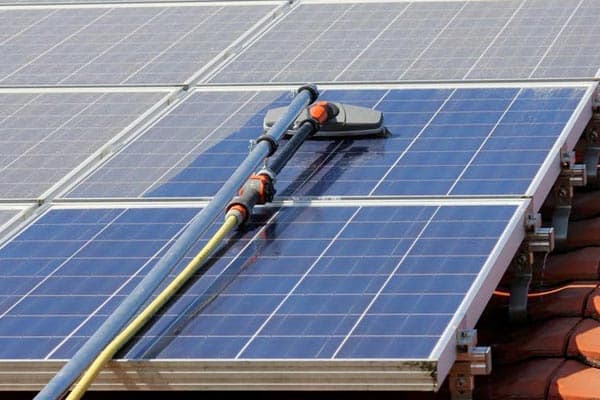
Dirty solar panels produce less electricity. It sounds obvious, but plenty of homeowners on the Mid North Coast forget about panel cleaning until their power bills start creeping up. Dust, pollen, bird droppings, and salt spray all build up over time and block sunlight from reaching the cells.
The good news is that cleaning solar panels is straightforward. Most homeowners can handle ground-level systems themselves, and even roof-mounted arrays only need professional attention once or twice a year.
Why Clean Panels Matter
A layer of grime on your panels can reduce output by 5% to 25%, depending on how thick the buildup is. On a 6.6 kW system, that could mean losing 1 to 4 kWh per day during peak production months. In heavily polluted or dusty areas, that loss can climb even higher.
- Bird droppings create hard spots that block entire cells, not just reduce light
- Salt spray from coastal areas like Port Macquarie leaves a film that builds up fast
- Pollen in spring and bushfire ash in summer coat panels in a fine layer
- Lichen and mould can take hold on panels that go years without cleaning
Panel tilt angle plays a role too. Steeper panels shed loose dust and debris when it rains, so they stay cleaner for longer. Flat-mounted or low-pitch arrays do not get that benefit and tend to accumulate grime faster, meaning they need more frequent attention.
A single bird dropping on one cell can reduce that entire string’s output. Panels are wired in series, so one blocked cell drags down the whole row.
Safety First
Before you pick up a hose, there are a few safety steps to get right. Solar panels carry electrical current whenever light hits them, and water and electricity do not mix well.
- Turn off the solar system at the inverter before you start
- If your panels are on the roof, assess whether you can safely reach them from a ladder or if you need scaffolding
- Never walk on solar panels or lean on them for support
- Avoid cleaning in full sun when panels are hot, as cold water on hot glass can cause micro-cracks
- Use a safety harness if working at height
If your roof is steep, high, or difficult to access, skip the DIY approach and call a professional. The cost of a professional clean is far less than the cost of a fall.
What You Need
You do not need any fancy equipment. Most of the gear is already in your shed or laundry.
- Garden hose with a gentle spray nozzle
- Soft brush or sponge on an extension pole
- Bucket of warm water with a small squirt of mild dish soap
- Squeegee with a rubber blade (optional, for streak-free finish)
- Microfibre cloth for stubborn spots
If you have hard water in your area (high mineral content), consider using demineralised or deionised water for the final rinse. Tap water with a high mineral load leaves white spots on the glass that can build up over repeated washes and reduce light transmission.
Avoid abrasive pads, high-pressure washers, and harsh chemical cleaners. These can scratch the anti-reflective coating on the glass or damage the aluminium frames.
Step-by-Step Cleaning Process
Follow these steps for a safe, effective clean that will not damage your panels.
- Rinse with plain water – Start by hosing down the panels with clean water to wash away loose dust, leaves, and debris. This prevents scratching when you start scrubbing.
- Apply soapy water – Dip your soft brush or sponge into the bucket and gently work it across the surface of each panel. Use light, even strokes. Let the soap do the work rather than pressing hard.
- Tackle stubborn spots – Bird droppings and tree sap may need a few minutes of soaking. Apply soapy water, leave it for 5 minutes, then gently wipe with a microfibre cloth.
- Rinse thoroughly – Wash off all soap residue with clean water. Leftover soap attracts more dirt and can leave a film that reduces performance.
- Squeegee or air dry – If your water is hard (high mineral content), use a squeegee to prevent water spots. Otherwise, letting them air dry is fine.
- Check your inverter – Once everything is dry, turn the system back on and check your inverter display or monitoring app. You should see output improve within the hour.
Best Time of Day to Clean
Timing matters more than most people think. Clean at the wrong time and you will either get a poor result or risk damaging the glass.
| Time of Day | Suitability | Why |
|---|---|---|
| Early morning (6-8am) | Best | Panels are cool, dew softens grime |
| Late afternoon (4-6pm) | Good | Panels have cooled down, still light to see |
| Overcast day | Good | No thermal shock risk, panels cool throughout |
| Midday sun | Avoid | Hot glass + cold water = micro-crack risk, water evaporates too fast |
Early morning is ideal because overnight dew loosens the dirt, making it easier to wash off. You also get the benefit of cleaning before peak production hours, so your panels are operating at full capacity for the sunniest part of the day.
How Often Should You Clean Solar Panels
There is no single answer here. It depends on your environment, roof angle, and what is growing or flying around your property.
- Coastal areas (Port Macquarie, Bonny Hills, Lake Cathie) – Every 3 to 4 months due to salt spray buildup
- Properties near trees – Every 3 to 6 months, more often if you have lorikeets or cockatoos visiting regularly
- Open, rural properties – Every 6 to 12 months is usually enough
- After major events – Clean immediately after bushfire smoke, dust storms, or heavy pollen seasons
Rain helps, but it is not a substitute for a proper clean. A light shower will wash away loose dust on angled panels, but it will not shift bird droppings, tree sap, or salt film. If your solar monitoring app shows output has not recovered after rain, the panels need a manual wash.
Check your monitoring app after rain. If output does not bounce back to normal levels, the rain was not enough and your panels need a proper clean.
DIY vs Professional Cleaning
For ground-mounted systems or single-storey roofs with easy access, DIY cleaning is perfectly fine. But there are situations where calling in a professional makes more sense.
| Scenario | DIY | Professional |
|---|---|---|
| Ground-mounted panels | Yes | Not needed |
| Single-storey, low pitch | Yes, with care | Optional |
| Double-storey roof | No | Recommended |
| Steep roof pitch | No | Required |
| Lichen or mould growth | No | Required (specialist products) |
Professional solar panel cleaners on the Mid North Coast typically charge between $100 and $250 depending on system size and roof access. Given that dirty panels can cost you more than that in lost production over a few months, it is a worthwhile investment.
Does Cleaning Void Your Solar Panel Warranty
This is a common concern, and the short answer is: not if you do it properly. Most panel manufacturers allow cleaning with water and a soft cloth or sponge. What can void your warranty is using high-pressure washers, abrasive materials, or chemical solvents that damage the anti-reflective coating or seals.
If you hire a third-party cleaner, check with your installer first. Some warranties require that servicing and cleaning be done by an accredited technician, and using someone without the right credentials could affect your coverage. The Clean Energy Council maintains a directory of accredited installers and service providers.
Things to Avoid When Cleaning
A few common mistakes can turn a simple clean into an expensive repair.
- High-pressure washers – The force can crack glass, damage seals, and push water into junction boxes
- Abrasive cleaners or scourers – These scratch the anti-reflective coating permanently
- Detergent with ammonia or alcohol – Can degrade panel coatings over time
- Cleaning in full sun – Thermal shock from cold water on hot glass can cause micro-fractures
- Walking on panels – Even if they look sturdy, the cells underneath are fragile
Monitoring Performance After Cleaning
The easiest way to tell if your clean made a difference is to check your solar monitoring app before and after. Most modern inverters from brands like Goodwe, Fronius, and Sungrow have apps that show daily production in real time.
- Note your daily kWh production the day before cleaning
- Clean the panels
- Compare the next clear day’s production to the pre-clean figure
- A 5% to 15% improvement is typical after cleaning panels that have not been touched in 6 months
If you are not seeing any improvement after cleaning, there may be another issue at play. Shading from new tree growth, an inverter fault, or a wiring problem can all reduce output regardless of how clean the panels are.
When to Call SolaXs
If you have cleaned your panels and performance has not improved, or if you notice physical damage like cracks, discolouration, or hotspots, it is time to get a professional inspection. Cracked or chipped glass does not always mean the whole panel needs replacing. In many cases, a targeted repair can restore the panel without the cost of a full replacement. With 25+ years of experience installing and maintaining solar systems across the Port Macquarie region, SolaXs can diagnose the problem and get your system back to full production.
Get in touch for a system health check or professional panel clean. Local, CEC accredited, and here to help your system perform at its best.
Cleaning Tips Specific to the Mid North Coast
Our coastal region throws a few unique challenges at solar panels that inland areas do not deal with. Salt spray, pollen from surrounding bushland, and bat or bird droppings are all common around Port Macquarie and neighbouring suburbs.
- Salt buildup homes within a few kilometres of the coast should rinse panels with fresh water every couple of months to prevent salt film from reducing output
- Pollen season spring brings heavy pollen deposits that cling to panel surfaces, particularly in leafy suburbs like Lake Cathie and Bonny Hills
- Bat and bird droppings flying fox colonies are common in our area and their droppings are acidic enough to damage anti-reflective coatings if left too long
- After storm season check for leaf debris and dirt buildup after heavy rain periods, as gutters and valleys on your roof can redirect grime onto panels
If your panels are on a steep or high roof, do not risk climbing up yourself. Contact SolaXs for a professional clean and system check. Safety always comes first.
Maintenance Schedule for Mid North Coast Systems
The climate on the Mid North Coast affects how often your system needs attention. Salt air near the coast accelerates corrosion, and pollen from surrounding bushland builds up on panels faster than in urban areas.
- Every 6 months: Visual inspection of panels for bird droppings, leaf buildup, or cracked glass. Rinse with a garden hose in the early morning when panels are cool.
- Every 12 months: Check inverter for error codes or warning lights. Clean any dust from ventilation grilles. Review your monitoring data for unexplained production drops.
- Every 2 years: Have a CEC-accredited installer inspect wiring, mounting brackets, and roof penetrations. Coastal homes should check for corrosion on aluminium frames.
- Every 5 years: Full system health check including isolator switches, earth bonding, and panel-level output testing. This catches problems before they become expensive.
SolaXs offers maintenance services for all solar systems on the Mid North Coast, regardless of who installed them.
For more information, see the Clean Energy Council buying solar guide and the Australian Government Small-scale Renewable Energy Scheme.
Frequently Asked Questions
Can I use a pressure washer to clean solar panels?
No. High-pressure water can crack the glass, break the seals around panel edges, and force water into junction boxes where it causes corrosion. Use a standard garden hose with a gentle spray nozzle instead. If the grime will not come off with water and a soft brush, soak the area with soapy water for a few minutes before wiping.
Does rain clean solar panels well enough on its own?
Rain removes loose dust from angled panels, but it will not shift bird droppings, tree sap, or salt film. If you live in a coastal area or near trees, rain alone is not enough. Check your monitoring app after a decent downpour. If production has not returned to normal, the panels need a manual clean.
How much does professional solar panel cleaning cost?
On the Mid North Coast, professional cleaning typically runs between $100 and $250 depending on the number of panels, roof height, and access difficulty. For a standard residential system, most jobs fall at the lower end of that range. The cost usually pays for itself within a few months through recovered energy production.
Will cleaning my solar panels void the warranty?
Not if you follow the manufacturer’s guidelines. Cleaning with water and a soft cloth or sponge is universally accepted. What can void a warranty is using high-pressure washers, chemical solvents, or abrasive materials. If hiring a third-party cleaner, check with your installer that the cleaner’s methods align with the warranty terms.
How can I tell if my solar panels need cleaning?
The most reliable method is checking your inverter’s monitoring app. Compare current daily output to what the system was producing when it was new or freshly cleaned, accounting for season and weather. A gradual decline over weeks or months with no obvious fault usually points to dirty panels. You can also do a visual check from the ground with binoculars if the panels are on the roof.
Is it safe to clean solar panels myself?
For ground-mounted systems and single-storey roofs with low pitch, yes. Turn the system off at the inverter first, use a garden hose and soft brush on an extension pole, and avoid working in full sun when panels are hot. If your panels are on a double-storey roof, a steep pitch, or are otherwise hard to reach, hire a professional. A fall from a roof is not worth the savings.