
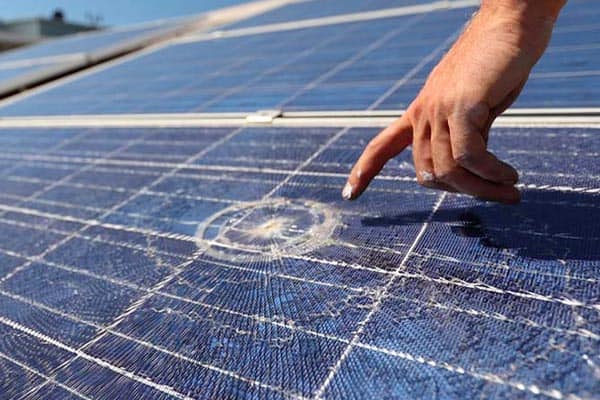
The Mid North Coast cops its fair share of wild weather. Summer storms roll through with little warning, hail can hammer rooftops in minutes, and the heat sits above 35 degrees for days at a stretch. If you have solar panels on your roof you have probably wondered how well they hold up when conditions turn rough.
The short answer is that modern solar panels are built tough. But there is more to it than that. Understanding how your system handles different weather events, and knowing what steps you can take before and after a storm, makes a real difference to the lifespan of your investment.
How Solar Panels Are Tested
Every solar panel sold in Australia must meet IEC 61215 and IEC 61730 standards. These are international benchmarks that put panels through a brutal series of tests before they reach your roof.
- Hail impact panels are hit with 25mm ice balls fired at 23 metres per second. That simulates golf-ball-sized hail at terminal velocity.
- Mechanical load 2400 pascals of pressure applied to the front surface and 2400 to the rear. This replicates sustained wind loads and snow weight.
- Thermal cycling panels are heated to 85°C then cooled to minus 40°C, repeated 200 times. This tests solder joints and cell connections under expansion and contraction.
- Damp heat 1000 hours at 85°C and 85% humidity. This checks for moisture ingress and corrosion of internal wiring.
Panels that pass these tests carry a product warranty of 12 to 15 years and a performance warranty of 25 to 30 years. The testing is genuinely harsh, and it means your system is designed for decades of Australian conditions.
Hailstorms on the Mid North Coast
Hail is the weather event that worries most solar owners. Port Macquarie and the surrounding region see severe thunderstorms through spring and summer, and some of those storms bring hail larger than what the standard tests cover.
Good to know: Standard IEC testing covers hailstones up to 25mm. If your area regularly sees hail larger than that, choosing a panel with a higher mechanical load rating (5400 Pa front, 2400 Pa rear) adds a meaningful layer of protection.
Tempered glass is the front layer on almost every residential panel. It is the same type of glass used in car windscreens, designed to absorb impact without shattering into dangerous shards. In the rare event that hail does crack the glass, the panel usually keeps generating power in the short term, but moisture will eventually reach the cells and cause degradation.
After any hailstorm, walk around your property and check for visible cracks or chips on the panel surface. If you spot damage, contact a CEC accredited installer to inspect the system. Running a damaged panel without repair can void your warranty.
Extreme Heat and Performance
Here is something that catches people off guard. Solar panels actually lose a small amount of efficiency as temperatures climb above 25°C. The industry measures this with a temperature coefficient, expressed as a percentage loss per degree.
| Panel Type | Typical Temp Coefficient | Output Loss at 40°C |
|---|---|---|
| Standard polycrystalline | -0.40% per °C | ~6% reduction |
| Monocrystalline PERC | -0.35% per °C | ~5.25% reduction |
| N-type / HJT panels | -0.26% per °C | ~3.9% reduction |
On a 40-degree day in Port Macquarie, your roof surface temperature can reach 65°C or higher. That means the cells themselves are well above the 25°C baseline. The losses are temporary and reverse as soon as temperatures drop, but they are worth understanding if you are comparing your summer output to your autumn numbers.
- N-type and heterojunction (HJT) panels handle heat better than older polycrystalline designs
- Good ventilation under the panels helps, so mounting with adequate clearance from the roof is important
- A north-facing system in our region will still produce strong output through summer despite the heat losses
Wind and Cyclone Ratings
The Mid North Coast sits in Wind Region A under Australian Standard AS/NZS 1170.2, which means our design wind speeds are lower than tropical regions further north. That said, severe storms and east coast lows can produce gusts above 100 km/h, and those gusts test both the panels and the mounting system.
- Panels themselves are rated to withstand 2400 Pa, roughly equivalent to sustained winds of 140 km/h
- The mounting rails and roof brackets must be engineered for your specific roof type and location
- Tilt angle affects wind loading. Flat-mounted panels cop less uplift than tilted arrays
- Microinverter and optimiser cables need proper securing so they do not flap in high winds
This is where professional installation matters most. A local installer with 25+ years of experience knows the roof types in this area, the soil conditions for ground mounts, and the wind patterns that affect specific suburbs. Getting the mounting right is just as important as choosing quality panels.
Heavy Rain and Flooding
Rain itself is not a problem for solar panels. In fact, a good downpour acts as a free cleaning service, washing away dust, pollen, and bird droppings that reduce output. The panels are sealed units with IP67 or IP68 rated junction boxes, so water does not penetrate during normal rain.
Flooding is a different story. If floodwater reaches your inverter or switchboard, the electrical components can be seriously damaged. Inverters are typically wall-mounted at waist height or higher, but in flood-prone areas it pays to mount them as high as practical.
- Never touch your solar system during or after flooding until a licensed electrician has inspected it
- Turn off the solar isolator at the switchboard if it is safe to access
- Document any damage with photos for your insurance claim
- Contact your installer for a full system inspection before switching back on
What to Do After a Severe Weather Event
After any major storm, there are a few practical steps that protect both your system and your warranty.
- Check your monitoring app or inverter display for any sudden drop in output
- Visually inspect panels from the ground for cracks, chips, or displaced frames
- Look for debris on or around the array, including branches sitting on cables
- Check the inverter for error codes or warning lights
- If anything looks off, call a CEC accredited installer for a professional inspection
Do not climb onto your roof to inspect panels yourself. Damaged panels can carry live voltage even when the system is switched off. Always use a qualified professional.
Insurance and Your Solar System
Most home and contents insurance policies cover solar panels as part of the building, but it is worth checking the specifics with your insurer. A few things to confirm:
- Is the full replacement cost of the system covered, including labour?
- Are you covered for storm damage, hail, and flood?
- Does your sum insured reflect the current replacement cost?
- Is there a separate excess for storm or weather-related claims?
Keep a copy of your installation invoice, panel serial numbers, and warranty documents in a safe place. These speed up the claims process if you ever need them.
Protecting Your Investment on the Mid North Coast
Solar panels are one of the most weather-resilient products you can put on your home. They handle heat, rain, wind, and hail as part of their normal operating life. The key to getting the full 25+ years out of your system comes down to three things: quality panels, professional installation, and acting quickly if something does go wrong.
At SolaXs we have been installing solar across Port Macquarie and the Mid North Coast for over 25 years. We know the local conditions, we use panels and mounting systems rated for our weather, and we are here to help if a storm causes problems. Get in touch for a free quote or a post-storm inspection.
Preparing Your System for Storm Season
The Mid North Coast cops some serious weather between November and March. Preparing your solar system before storm season is far cheaper than repairing damage after it.
- Check mounting hardware ask your installer to inspect rail clamps and roof attachments before summer, especially if the system is more than five years old
- Trim overhanging branches falling limbs cause more solar panel damage on the Mid North Coast than hail does, particularly in suburbs like Wauchope surrounded by tall eucalypts
- Review your insurance confirm your home insurance covers solar panels and battery systems as part of the building, not as separate contents
- Know your shutdown procedure familiarise yourself with how to isolate your system at the main DC isolator and AC isolator in case of emergency
After any severe weather event, have your system inspected before switching it back on. Micro-cracks in panels are invisible from the ground but reduce output permanently. Book a post-storm inspection with our team if you are in the Port Macquarie region.
What This Means for Mid North Coast Homeowners
The Mid North Coast is one of the best regions in Australia for solar. With around 5.2 peak sun hours per day and rising electricity prices, the numbers keep improving for homeowners who go solar.
- High solar yield: Port Macquarie, Coffs Harbour, and surrounding areas receive consistent sunlight year-round. Even in winter, a well-sized system produces enough to cover most daytime usage.
- Rising grid costs: Electricity prices on the Mid North Coast have increased by more than 20% over the past three years. Solar locks in a fixed energy cost for 25 years.
- Strong feed-in tariffs are gone: The days of generous feed-in rates are over. Self-consumption is now the key to savings, which makes system sizing and battery storage more important than ever.
- Local installers matter: When something goes wrong, you want an installer who can be on your roof the same week, not a company based in Sydney or Melbourne.
SolaXs has been installing and servicing solar systems in the Port Macquarie region for over 25 years. Get a free quote tailored to your property and energy usage.
For more information, see the Clean Energy Council buying solar guide and the Australian Government Small-scale Renewable Energy Scheme.