
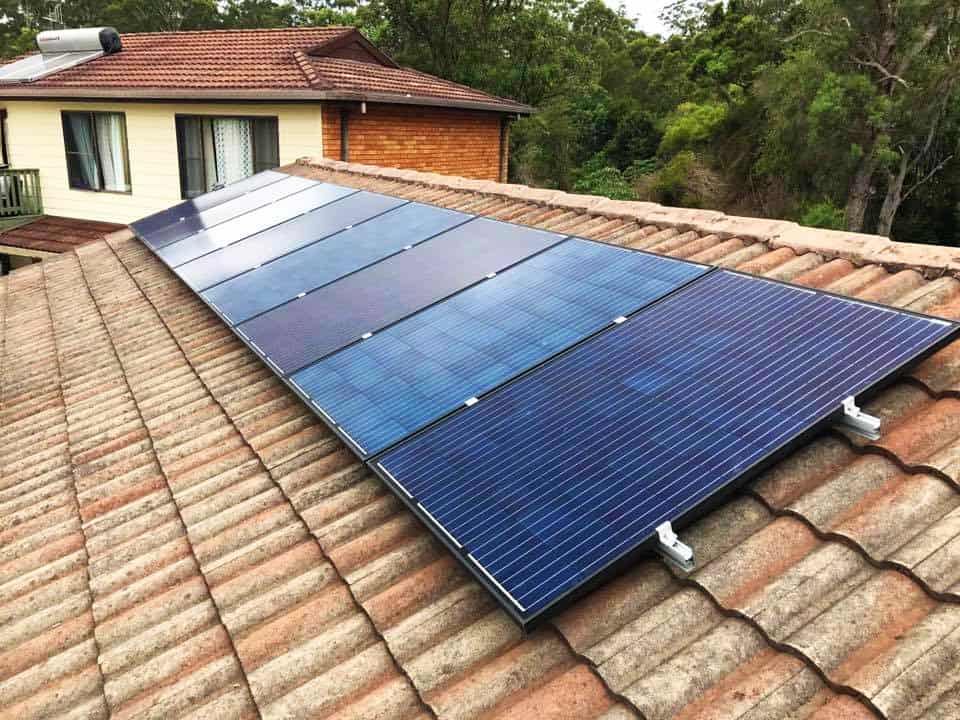
Port Macquarie ticks every box for residential solar. High sunshine hours, stable weather patterns, and strong government rebates mean homeowners here get more from their panels than most places in Australia. Below is a practical look at why the region is so well suited to solar and what that means for your household.
Sunshine Hours and Solar Output
The Mid North Coast averages around 5.2 peak sun hours per day across the year. In summer, that figure pushes closer to 6.5 hours. Even in winter, Port Macquarie rarely drops below 3.8 hours, which keeps your panels producing meaningful output all year round.
That consistent sunlight translates directly into electricity. A 6.6kW solar system on a north-facing roof in Port Macquarie will typically generate between 25 and 28 kWh per day on an annual average. That is more than enough to cover a standard household’s daytime consumption and still leave surplus for export or battery storage.
- Annual average: ~5.2 peak sun hours per day
- Summer peak: ~6.5 hours
- Winter low: ~3.8 hours
- Annual output for a 6.6kW system: approximately 9,200 to 10,200 kWh
Mild Climate Helps Panels Perform
Solar panels actually lose efficiency in extreme heat. For every degree above 25°C at the panel surface, output drops by roughly 0.3 to 0.5 percent depending on the panel type. Port Macquarie’s coastal climate keeps temperatures moderate compared to inland NSW, which means your panels hold closer to their rated output more often.
The sea breeze that comes through most afternoons also helps cool roof-mounted panels. This is a genuine advantage over hotter inland regions where panel surface temperatures can hit 65°C or more on a summer afternoon. Over a full year, that temperature difference adds up to measurably higher energy production from the same hardware.
| Factor | Port Macquarie | Inland NSW (e.g. Dubbo) |
|---|---|---|
| Average summer max | 27°C | 33°C |
| Panel efficiency loss in summer | Lower | Higher |
| Coastal cooling effect | Yes | No |
| Annual sun hours | ~5.2 peak hours | ~5.5 peak hours |
| Net output advantage | Moderate temps offset fewer hours | More sun but more heat loss |
Roof Conditions in the Area
Most homes in Port Macquarie have metal or tile roofs with good pitch angles for solar. The typical roof pitch of 22 to 25 degrees is close to the ideal angle for panels on the Mid North Coast. North-facing roof space is common in the area’s housing stock, which is the best orientation for maximum generation.
Even if your roof faces east-west, split array systems work well in this climate. You generate slightly less total energy, but the production curve spreads across more of the day, which can actually improve self-consumption if you are home in the mornings and evenings.
- North-facing: Maximum total output, strong midday peak
- East-west split: Broader production curve, better for morning and afternoon usage
- West-facing: Produces more in the afternoon when electricity rates are highest
- Flat roof: Tilt frames bring panels to the right angle for the region
Electricity Prices Make the Payback Faster
NSW electricity prices have climbed steadily over the past decade. The average residential rate on the Mid North Coast sits around 30 to 35 cents per kWh, with time-of-use tariffs pushing evening peak rates above 40 cents. Every kilowatt-hour you generate and use from your own panels avoids that cost entirely.
For a typical 6.6kW system the payback period in Port Macquarie is usually between 3 and 5 years, depending on your usage patterns and how much you self-consume versus export. After that, you are generating free electricity for the remaining 20-plus years of your system’s lifespan. Most quality panels now come with 25-year performance warranties, so the numbers are firmly in your favour.
- Average retail electricity rate: 30 to 35c/kWh
- Time-of-use peak rate: 40 to 50c/kWh
- Feed-in tariff for exports: 5 to 8c/kWh
- Self-consumed solar value: 30 to 35c/kWh (avoided cost)
- Typical payback period: 3 to 5 years
Government Rebates Reduce the Upfront Cost
The federal STC rebate brings down the cost of a 6.6kW system by roughly $2,500 to $3,000. This is applied as a point-of-sale discount, so you pay less upfront rather than waiting for a refund. Your installer handles the STC paperwork as part of the installation process.
If you are adding a solar battery the federal battery rebate and NSW VPP incentive can save you around $5,000 on a typical 11.5 kWh system. These incentives are scheduled to reduce after 1 May 2026 when the deeming factor drops and size tapering kicks in, so acting before that date locks in the higher rebate.
- Federal STC rebate: ~$2,500 to $3,000 off a 6.6kW system
- Federal battery rebate + NSW VPP: Up to ~$5,000 on an 11.5 kWh battery
- Applied at point of sale: No waiting for refunds
- Scheduled reduction: Deeming factor drops 1 May 2026
Batteries Make Even More Sense Here
Port Macquarie’s solar generation profile produces a surplus during the middle of the day when many households are at work or school. Without a battery that surplus gets exported for a low feed-in tariff. With a battery from brands like BYD Sigenergy or Goodwe you store that energy and use it in the evening when rates are highest.
Batteries also provide blackout protection. The Mid North Coast sees storm-related outages several times a year, particularly during the summer months. Having stored energy means your fridge, lights, and internet stay running until the grid is restored. If the outage stretches into the next day, your panels recharge the battery and keep your home powered.
Pairing Solar With an EV Charger
Electric vehicle uptake is growing across the region. If you own or plan to buy an EV, charging it from your own solar is far cheaper than using grid electricity or public chargers. A 10kW or 13.2kW system paired with a dedicated EV charger lets you fuel your car from your roof.
Charging during peak solar hours (10am to 2pm) means you are using energy that would otherwise be exported at a low feed-in rate. The cost per kilometre drops to close to nothing, and you are running your car on clean energy generated right on your property.
- Average EV consumption: 15 to 18 kWh per 100 km
- Solar charging cost: effectively free during peak generation
- Grid charging cost: 30 to 35c/kWh ($4.50 to $6.30 per 100 km)
- Annual savings for a 12,000 km driver: $500 to $750
What Makes a Good Solar System for This Region
The right system for Port Macquarie is not just about panel count. Your inverter needs to handle the local grid conditions, your panel layout should account for any shading from trees or neighbouring buildings, and the wiring needs to be rated for coastal conditions where salt air can corrode cheaper components over time.
Quality inverters from brands like Fronius and Goodwe are built to handle Australian conditions and come with strong warranty support. Paired with tier-one panels from Canadian Solar or Jinko you get a system that will perform reliably for decades.
- Choose an inverter rated for Australian grid standards
- Use tier-one panels with 25-year performance warranties
- Ensure wiring and mounting hardware is rated for coastal environments
- Work with a CEC-accredited installer who knows Mid North Coast conditions
Get a Quote From a Local Installer
SolaXs is a CEC-accredited solar installer based right here on the Mid North Coast. With over 25 years of experience, we design systems around local conditions, your roof, your usage, and the rebates available to you.
Contact us for a free quote. We will assess your property, recommend the right system size, and show you exactly what you can expect to save.
Common Solar Mistakes Mid North Coast Homeowners Make
Living on the Mid North Coast gives you a head start with solar, but plenty of homeowners still trip up during the process. Avoiding these pitfalls means you get the most out of Port Macquarie’s generous sunshine from day one.
- Oversizing or undersizing the system a 6.6kW solar system suits many households, but larger homes with pools or EV chargers may need a 10kW or 13.2kW system
- Ignoring roof orientation north-facing panels produce the most energy in our region, but east-west splits work well for households that use power morning and evening
- Choosing the cheapest installer uncertified installers void manufacturer warranties and can cause roof leaks that cost thousands to repair
- Skipping battery storage with current solar battery rebates available in NSW, adding storage has never been more affordable
- Not checking shading even partial shade from a single tree branch can reduce panel output by up to 25 percent across an entire string
A local CEC-accredited installer will assess your roof, usage patterns, and shading before recommending a system. That upfront assessment is what separates a solar investment from a solar gamble.
What This Means for Mid North Coast Homeowners
The Mid North Coast is one of the best regions in Australia for solar. With around 5.2 peak sun hours per day and rising electricity prices, the numbers keep improving for homeowners who go solar.
- High solar yield: Port Macquarie, Coffs Harbour, and surrounding areas receive consistent sunlight year-round. Even in winter, a well-sized system produces enough to cover most daytime usage.
- Rising grid costs: Electricity prices on the Mid North Coast have increased by more than 20% over the past three years. Solar locks in a fixed energy cost for 25 years.
- Strong feed-in tariffs are gone: The days of generous feed-in rates are over. Self-consumption is now the key to savings, which makes system sizing and battery storage more important than ever.
- Local installers matter: When something goes wrong, you want an installer who can be on your roof the same week, not a company based in Sydney or Melbourne.
SolaXs has been installing and servicing solar systems in the Port Macquarie region for over 25 years. Get a free quote tailored to your property and energy usage.
For more information, see the Clean Energy Council solar buyers guide and the Australian Government solar PV and batteries.