
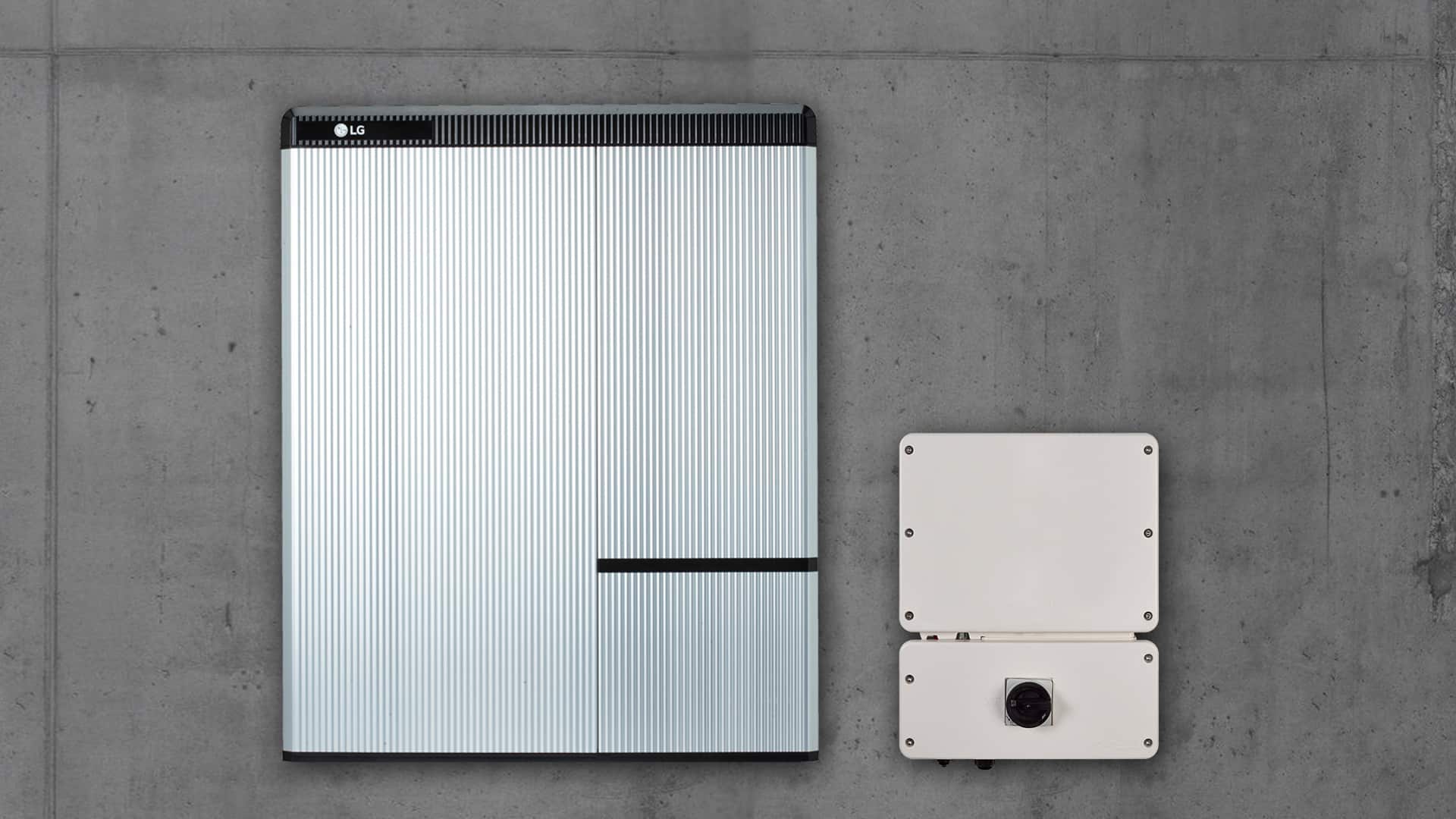
The Tesla Powerwall 3 is the simpler choice if backup power and one polished app matter most. The BYD Battery-Box HVM is the more flexible choice when you want modular capacity and a compatible third-party inverter.
Both are established home batteries, but they take different approaches. Tesla combines the battery, solar inverter and controls in one unit. BYD supplies modular battery storage that works through a separately selected compatible inverter.
Before comparing brands, it is worth checking whether a home solar battery suits your usage and existing solar system. Battery size, evening consumption and backup loads matter more than the badge on the cabinet.
Want the full breakdown on each battery? Read our Tesla Powerwall 3 review and BYD Battery-Box review for more detailed specifications and installation considerations.
Tesla Powerwall vs BYD specs compared
The headline figures are useful, provided they are compared on the same basis. Tesla reports AC energy and system output. BYD reports DC battery figures, while usable AC output and backup performance depend on the inverter paired with it.
| Specification | Tesla Powerwall 3 | BYD Battery-Box HVM |
|---|---|---|
| Cell chemistry disclosed by manufacturer | Lithium-ion; chemistry is not specified in Tesla’s Australian datasheet | LFP (lithium iron phosphate) |
| Usable capacity | 13.5 kWh AC per unit | 8.28 to 22.08 kWh DC per stack |
| Expansion | Up to three 13.5 kWh expansion units per Powerwall 3; market limits apply | Modules can be added to a stack; up to three identical stacks provide 66.2 kWh |
| Nominal output | Up to 11.04 kW AC in listed configurations; local limits apply | 7.68 to 20.48 kW rated DC by stack size; AC output depends on inverter |
| Efficiency | 89% solar-to-battery-to-home/grid | At least 96% battery round trip, measured on the DC side |
| Warranty | 10 years; Tesla states at least 70% capacity retention under applicable terms | 10 years or the model’s minimum throughput, whichever comes first; 70% usable energy retention |
| Inverter | Integrated solar inverter; can also be added to eligible existing solar | Requires a compatible battery inverter |
| Backup | Backup through Tesla Backup Gateway 2 | Depends on the compatible inverter and system design |
| Weight | 130 kg | 129 kg at 8.28 kWh to 319 kg at 22.08 kWh |
The efficiency figures are not directly equivalent. Tesla’s 89% covers the journey from solar generation through battery storage and back to the home or grid. BYD’s figure is measured at the DC battery, before losses through the external inverter.
Battery chemistry and safety
BYD identifies the Battery-Box HVM as a cobalt-free lithium iron phosphate battery. LFP is known for thermal stability, but chemistry is only one part of a safe system. Product approval, correct siting, compatible equipment and installation to Australian standards all matter.
Tesla describes Powerwall 3 as lithium-ion in its safety documents, but its Australian datasheet does not identify a specific cell chemistry. That means a fair Tesla Powerwall vs BYD comparison should not claim both products use LFP without a model-specific Tesla source.
- BYD: LFP chemistry is stated in the Australian product datasheet.
- Tesla: The enclosure, controls and installation requirements form part of the safety case, regardless of the cell chemistry.
- Either system: Use approved equipment and an accredited installer who follows the required clearances and location rules.
For the basics behind charging, discharging and usable capacity, read our guide to how solar batteries work.
Tesla Powerwall vs BYD price in Australia
Installed prices vary with switchboard work, backup circuits, inverter choice and site access. For Tesla-specific inclusions and current guidance, see our Tesla Powerwall 3 installed price guide.
| Battery | Indicative installed range before incentives | What changes the quote |
|---|---|---|
| Tesla Powerwall 3 (13.5 kWh) | $16,000 to $18,000 | Backup Gateway, switchboard and site work |
| BYD HVM 11.0 (11.04 kWh) | $8,000 to $10,000 | Compatible inverter and backup design |
| BYD HVM 16.6 (16.56 kWh) | $10,000 to $13,000 | Inverter capacity and electrical work |
| BYD HVM 22.1 (22.08 kWh) | $13,000 to $16,000 | Larger stack, inverter and installation requirements |
Tesla’s integrated solar inverter accounts for part of its price. BYD needs a compatible inverter such as selected Fronius, SMA, GoodWe or SolarEdge models. Compatibility must be checked against BYD’s current list rather than assumed from the brand name alone.
For context across other brands and system sizes, see our guide to how much solar batteries cost in Australia.
Government rebates and incentives
Last updated 3 September 2026. Eligible Tesla Powerwall 3 and BYD Battery-Box installations may receive the federal Cheaper Home Batteries Program discount. In NSW, a separate incentive may also be available when an eligible battery is connected to a participating virtual power plant.
- Federal program: The discount is delivered through Small-scale Technology Certificates and is generally passed on by the retailer or installer. From 1 May 2026, the STC factor is 6.8 for the rest of 2026, with reduced support applying to capacity above 14 kWh and again above 28 kWh. See the Australian Government program rules.
- NSW VPP incentive: The payment depends on the usable capacity made available to the grid, the provider and the contract. Eligible batteries must be more than 2 kWh and no more than 50 kWh, with the incentive calculation capped at 28 kWh. Check the current NSW VPP incentive before signing.
The NSW battery installation discount for households is no longer available. The current household support is the federal battery discount, which may be combined with the NSW VPP incentive if both sets of eligibility rules are met.
Do not compare quotes using a headline rebate figure alone. Ask each installer to show the eligible capacity, certificate calculation, VPP conditions and final out-of-pocket price.
Inverter compatibility and retrofit options
Powerwall 3 has an integrated solar inverter, but it can also be added to eligible existing solar systems. It does not automatically require a working solar inverter to be removed. The final AC- or DC-connected design depends on the existing system and the installer-approved configuration.
BYD Battery-Box HVM is a high-voltage DC battery. It must be paired with a specific compatible inverter and firmware combination. Owning a Fronius, GoodWe, SMA or SolarEdge inverter does not by itself guarantee compatibility.
- New residential solar and battery installation: Tesla reduces the number of separate components. BYD gives you more choice over battery stack size and compatible inverter.
- Battery for existing solar: Start with an inverter and switchboard check. Our guide to adding a battery to an existing solar system explains the questions to resolve before requesting quotes.
- Older or undersized system: If the inverter, array or switchboard also needs work, a planned solar system upgrade can avoid piecemeal replacements.
Blackout protection
Tesla makes backup design straightforward. Powerwall 3 works with Backup Gateway 2, which detects an outage and isolates the home from the grid. Tesla states that one unit can provide whole-home backup for most homes, subject to local output limits and the loads running at the time.
BYD can also support backup and off-grid operation, but the result depends on the paired inverter, backup hardware and circuits selected. Some designs back up the whole home; others reserve battery power for nominated essentials.
- Tesla Powerwall 3: Quick backup transition, solar recharging during an outage and up to 10 kW backup power under the current Australian consumer specification.
- BYD Battery-Box HVM: Backup capability and output are set by the compatible inverter and system design.
Air conditioning, electric hot water, pumps and EV charging can exhaust a battery quickly. A proper backup plan separates the question of what can start from what can run for the required number of hours.
Warranty and long-term value
Both products have ten-year warranty terms, but the wording is different. Tesla states at least 70% capacity retention after ten years under its applicable warranty terms. BYD’s Australian performance warranty ends after ten years or when the model-specific minimum energy throughput is reached, whichever comes first.
This is more useful than a generic cycle-life claim. Household cycles are rarely identical, and warranty throughput gives you a documented limit that can be compared across the exact battery sizes on your quote.
Payback also cannot be reduced to one universal number. It depends on the installed price after incentives, the amount of solar that would otherwise be exported cheaply, evening grid rates, battery losses and any VPP revenue.
A useful quote should include a savings model based on your interval data. Be cautious with a payback estimate built from an assumed daily full cycle if your household does not have enough surplus solar or evening demand to achieve it.
App experience and monitoring
The Tesla app puts live energy flow, history, backup reserve and Storm Watch in one place. It is the cleaner experience for households that want one interface for solar, battery and backup settings.
BYD monitoring comes through the paired inverter platform, so the experience varies by system.
- Tesla: One app for live energy flow, history, Storm Watch and backup reserve.
- BYD with Fronius: Monitoring is handled through Fronius Solar.web.
- BYD with GoodWe: Monitoring is handled through the GoodWe SEMS platform.
Mid North Coast installation considerations
On the Mid North Coast, cabinet location deserves as much attention as the specification sheet. BYD lists an IP55 enclosure and an operating range of -10°C to 50°C. Tesla lists operation from -20°C to 50°C and resistance to dust and temporary flooding, subject to its installation requirements.
- Keep required clearances and emergency access unobstructed.
- Choose a position that follows the manufacturer’s weather and temperature limits.
- Have the installer assess direct sun, drainage, salt exposure and flood risk at the actual property.
An enclosure rating is not permission to put a battery anywhere. Product warranty conditions, AS/NZS 5139 siting rules and local site conditions still govern the installation.
Which battery should you choose
Neither battery wins every comparison. Match the system to the house and the job it needs to do.
Choose the Tesla Powerwall 3 if:
- You want integrated solar and battery controls with a strong backup focus.
- You prefer one app for monitoring and backup settings.
- A fixed 13.5 kWh unit, or Tesla expansion path, suits the capacity you need.
- Your installer confirms the single-phase output and backup design suit your loads.
Choose the BYD Battery-Box HVM if:
- You want to size storage in smaller modular steps.
- You already have, or plan to install, a specifically compatible battery inverter.
- You want the manufacturer-documented LFP chemistry and modular stack design.
- You are comfortable using the inverter manufacturer’s monitoring platform.
Still unsure? SolaXs installs Tesla Powerwall and BYD Battery-Box systems across the Mid North Coast. Request a battery consultation so we can check your interval data, existing equipment, backup loads and site before recommending a system.
Frequently asked questions
Is the BYD Battery-Box safe?
BYD uses cobalt-free LFP cells and lists IEC 62619 and other product certifications in its Australian datasheet. Safe use still depends on approved equipment, correct system design, compliant installation and following the manufacturer’s operating limits.
Can I add a BYD battery to my existing solar system?
Possibly. Battery-Box HVM needs a compatible high-voltage inverter, including the correct model and firmware. An installer should check the existing inverter, switchboard and network approval before confirming that the battery can be added without other upgrades.
Can Powerwall 3 be added to existing solar?
Yes, Tesla says Powerwall 3 can be added to eligible existing solar systems and is compatible with major inverter brands. The approved design depends on the system already installed, the grid connection and the backup requirements.
Do Tesla Powerwall and BYD qualify for government incentives?
Eligible models and installations may receive the federal Cheaper Home Batteries Program discount. In NSW, an eligible battery may also receive the VPP connection incentive. The product, installer, installation date, usable capacity and VPP agreement must meet the rules current on the installation date.
Which battery has the better warranty?
Both have ten-year terms, but they are not identical. Tesla states a ten-year warranty with at least 70% capacity retention under the applicable terms. BYD warrants 70% usable energy for ten years or until the model-specific minimum throughput is reached, whichever happens first.
Can either battery power my whole home during a blackout?
Powerwall 3 can provide whole-home backup for many Australian homes when it is installed with the required gateway, but available power and runtime still limit what can run together. A BYD system can also provide backup when paired with suitable inverter and backup hardware. In either case, the installer should design around the home’s largest loads and the required outage duration.
Get advice based on your actual energy use
A product comparison gets you part of the way. The final choice depends on your inverter, switchboard, tariff, export profile, backup circuits and where the battery can be installed.
SolaXs has more than 25 years of electrical and solar experience on the Mid North Coast. We install both systems and can explain where each one fits, including the trade-offs.
Contact SolaXs for a site-specific battery quote.