
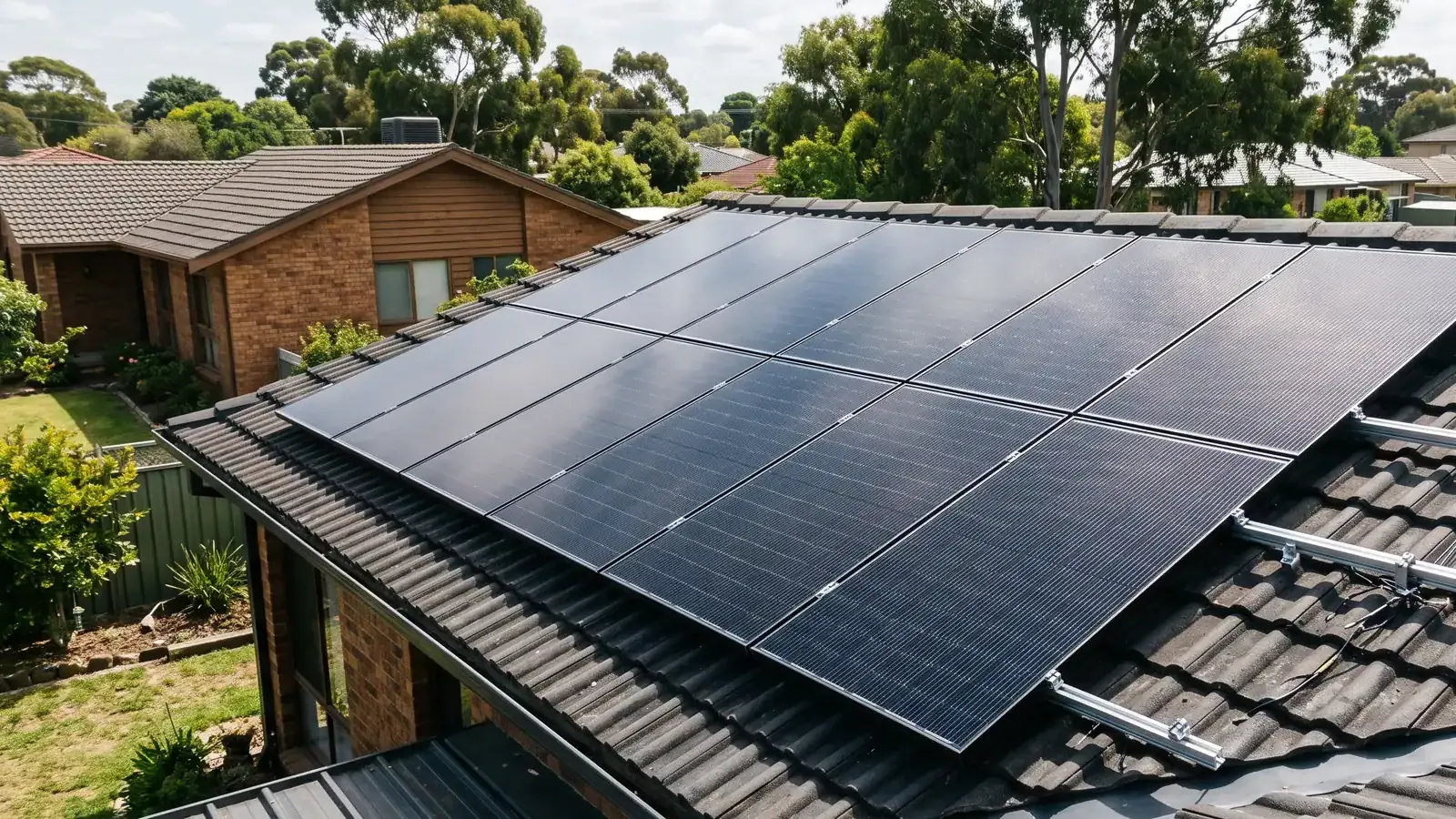
Q Cells made solid solar panels, but they pulled out of Australia in early 2024.
If you're researching Q Cells for a rooftop system, you'll find plenty of glowing reviews from years past. What most of them skip is the part that matters right now: you can't buy new Q Cells panels from an Australian distributor, and local support runs through a third-party company called Zeco.
Here's what you need to know: the specs, why Q Cells left, and what panels you can actually get installed on the Mid North Coast today.
Related reading: See our full comparison of the best solar panels in Australia or explore residential solar installation on the Mid North Coast.
What are Q Cells solar panels?
Q Cells started in Thalheim, Germany in 1999. South Korean conglomerate Hanwha Group acquired the company in 2012, and it traded as Hanwha Q Cells until rebranding to simply Qcells. At its peak, the company ran an annual production capacity of 11.2 GW and held a spot on the Bloomberg BNEF Tier 1 manufacturer list.
The panels were built around Q Cells' proprietary Q.ANTUM technology, a PERC cell architecture combined with half-cell design and zero-gap cell arrangement. Q.ANTUM's half-cell layout reduced electrical losses and improved shade tolerance compared to full-cell panels of the same era.
- Headquarters: Seoul, South Korea (originally Germany)
- Cell tech: PERC and N-type TOPCon across the range
- Certifications: Clean Energy Council approved, IEC 61215/61730, VDE Quality Tested
- STC eligible: Yes, panels on the CEC approved modules list qualified for Small-scale Technology Certificates
Q Cells earned a reputation for consistent manufacturing quality. Q Cells panels passed PVEL's thermal cycling and damp heat tests as a Top Performer in 2024. But test results don't help much if you can't buy the panels.
Q Cells solar panel specs and performance
Q Cells produced two main residential lines worth knowing about. The Q.PEAK DUO BLK ML-G10+ was their workhorse, and the Q.TRON BLK M-G2+ was the premium N-type option released later in their product cycle.
| Spec | Q.PEAK DUO BLK ML-G10+ | Q.TRON BLK M-G2+ |
|---|---|---|
| Power output | 395 to 415 W | 405 to 440 W |
| Efficiency | 20.1 to 21.1% | 21.3 to 22.5% |
| Temp coefficient | -0.34%/°C | -0.30%/°C |
| Product warranty | 25 years | 25 years |
| Performance warranty | 25 years (86% at year 25) | 25 years (90.58% at year 25) |
| Cell type | PERC mono | N-type TOPCon |
The Q.TRON line offered a better temperature coefficient at -0.30%/°C. On a 40°C day on the Mid North Coast, that translates to roughly 4.5% output loss above the 25°C test standard, versus about 5.1% for the Q.PEAK DUO.
Q Cells rated both lines for an operating range of -40°C to 85°C. For Australian conditions, the ceiling matters more than the floor.
Pros and cons of Q Cells panels
Q Cells built good panels. But good panels you can't buy or get locally serviced are a different proposition entirely.
Strengths
- Consistent build quality and PVEL Top Performer status
- Strong low-light performance from Q.ANTUM half-cell design
- Competitive efficiency, particularly the Q.TRON N-type line at 22.5%
- 25-year product and performance warranty on residential models
- Anti-PID and anti-LID technology reduced long-term degradation
Weaknesses
- No longer available in Australia since February 2024
- Warranty support runs through Zeco, not Q Cells directly
- Efficiency now trails newer N-type panels from competitors (Canadian Solar and Jinko both push past 23%)
- No local technical support team for installers
- Remaining stock, if you find any, comes without standard distributor backing
The warranty concern is the big one. Q Cells panels already on roofs are covered under Australian Consumer Law regardless of the manufacturer's presence. But getting a claim processed through a third party adds time and uncertainty that a locally supported brand avoids.
Why Q Cells left Australia
In February 2024, Q Cells announced it was pulling out of the Australian residential market. Q Cells blamed "record-breaking price drops and extreme market competition." Pricing pressure from Chinese manufacturers had squeezed margins to the point where staying didn't make sense.
If you already own Q Cells panels: Your manufacturer warranty still applies. Zeco, an Australian company, handles Q Cells warranty claims locally. You can also pursue remedies under the Australian Consumer Law, which protects buyers regardless of whether a manufacturer maintains a local presence.
For anyone shopping for a new system, the exit changes the equation. New Q Cells stock is essentially unavailable through standard channels. If a supplier offers you Q Cells panels, ask where they sourced them and what happens when you need a warranty replacement in five years.
Q Cells built quality panels, and existing installations will keep producing for decades. The exit was a business call, not a quality one. Australian homeowners looking to buy new panels are simply better off with a brand that has boots on the ground here.
How Q Cells compare to panels you can get right now
The brands that now fill the space Q Cells occupied have moved the specs forward. Here is how Q Cells' residential flagship stacks up against panels SolaXs installs on the Mid North Coast.
| Feature | Q Cells Q.PEAK DUO | Canadian Solar | Jinko Tiger Neo | REC Alpha | Trina Vertex S+ |
|---|---|---|---|---|---|
| Max efficiency | 21.1% | 23.4% | 22.8% | 22.3% | 22.5% |
| Power range (res.) | 350 to 415 W | 445 to 475 W | 430 to 450 W | 400 to 430 W | 430 to 450 W |
| Temp coefficient | -0.34%/°C | -0.29%/°C | -0.29%/°C | -0.24%/°C | -0.29%/°C |
| Product warranty | 25 years | 25 years | 25 years | 25 years | 25 years |
| Performance warranty | 25 years | 30 years | 30 years | 25 years | 25 years |
| Available in AU | No | Yes | Yes | Yes | Yes |
REC Alpha panels lead on temperature coefficient at -0.24%/°C, which makes a measurable difference on 40°C Mid North Coast summer days. Canadian Solar and Jinko both extend the performance warranty to 30 years.
The practical upside is straightforward: you need fewer panels to reach the same system size, and the manufacturer picks up the phone when you call from Australia.
Which panels to choose instead of Q Cells
If Q Cells was on your shortlist, these five brands match or beat Q Cells on specs, and they're all properly distributed here with local warranty handling. We install all of them across the Mid North Coast.
- Canadian Solar runs TOPHiKu6 N-type panels at up to 23.4% efficiency with a 30-year performance warranty. Strong value across residential and commercial systems.
- Jinko Tiger Neo is one of the world's highest-volume panel brands. N-type TOPCon cells, 22.8% efficiency ceiling, and a 30-year performance guarantee. Read the full Jinko review.
- REC Alpha Pure-R is the one to look at if heat is your main concern. At -0.24%/°C it handles hot roofs better than anything else on this list.
- Trina Vertex S+ offers N-type performance at a competitive price point. Trina has been a Tier 1 manufacturer for over a decade. See the Trina solar panels review.
- Tindo Solar is Australian-made in Adelaide. If buying local matters to you, Tindo is the only manufacturer building panels on Australian soil. Read the Tindo review.
All five are CEC approved, STC eligible, and backed by manufacturers with permanent Australian operations. Q Cells cannot say the same anymore.
Frequently asked questions
Are Q Cells solar panels still available in Australia?
No. Q Cells withdrew from the Australian residential market in February 2024. You may find leftover stock through some suppliers, but new panels are no longer distributed here through official channels.
Standard distributor warranties and support do not apply to grey-market or clearance stock.
Who handles Q Cells warranty claims in Australia now?
An Australian company called Zeco manages Q Cells warranty claims locally. Your rights under Australian Consumer Law also apply, meaning you can pursue the retailer or installer who sold the system if the manufacturer's representative is unresponsive.
Are Q Cells panels Tier 1?
Q Cells held Tier 1 status on the Bloomberg BNEF bankability list. Tier 1 reflects the manufacturer's financial stability and market presence, not panel quality directly. Given the Australian exit, the practical value of that rating has diminished for local buyers.
How do Q Cells compare to Jinko and Canadian Solar?
Both Jinko and Canadian Solar now exceed Q Cells on efficiency (22.8% and 23.4% respectively versus 21.1%), offer better temperature coefficients, and carry 30-year performance warranties compared to Q Cells' 25. Both maintain full Australian distribution networks.
What should I buy instead of Q Cells in Australia?
Canadian Solar, Jinko, REC, Trina, and Tindo all offer comparable or better specifications with full Australian support. The right pick depends on your roof layout, budget, and how much heat tolerance matters in your area. Talk to a CEC-accredited installer who works with multiple brands rather than shopping on specs alone.
How long do Q Cells solar panels last?
Q Cells panels carry a 25-year performance warranty guaranteeing 86% output at year 25 (90.58% for the Q.TRON line). Solar panels in general produce power well beyond their warranty period, and Q Cells panels already on roofs will keep generating for decades.
The bottom line on Q Cells in Australia
Q Cells made reliable solar panels. The problem for Australian homeowners is purely practical: you can't buy them new, and after-sales support runs through a third party rather than the manufacturer.
The panels that replaced Q Cells in Australia are more efficient, handle heat better, and come with longer warranties from manufacturers that are actually still here.
If you are in Port Macquarie or anywhere on the Mid North Coast and want help choosing the right panels for your home, get in touch with SolaXs. We've been installing solar on the Mid North Coast since the late 1990s, and every brand we carry comes with proper Australian manufacturer support.
Last updated August 2026.