
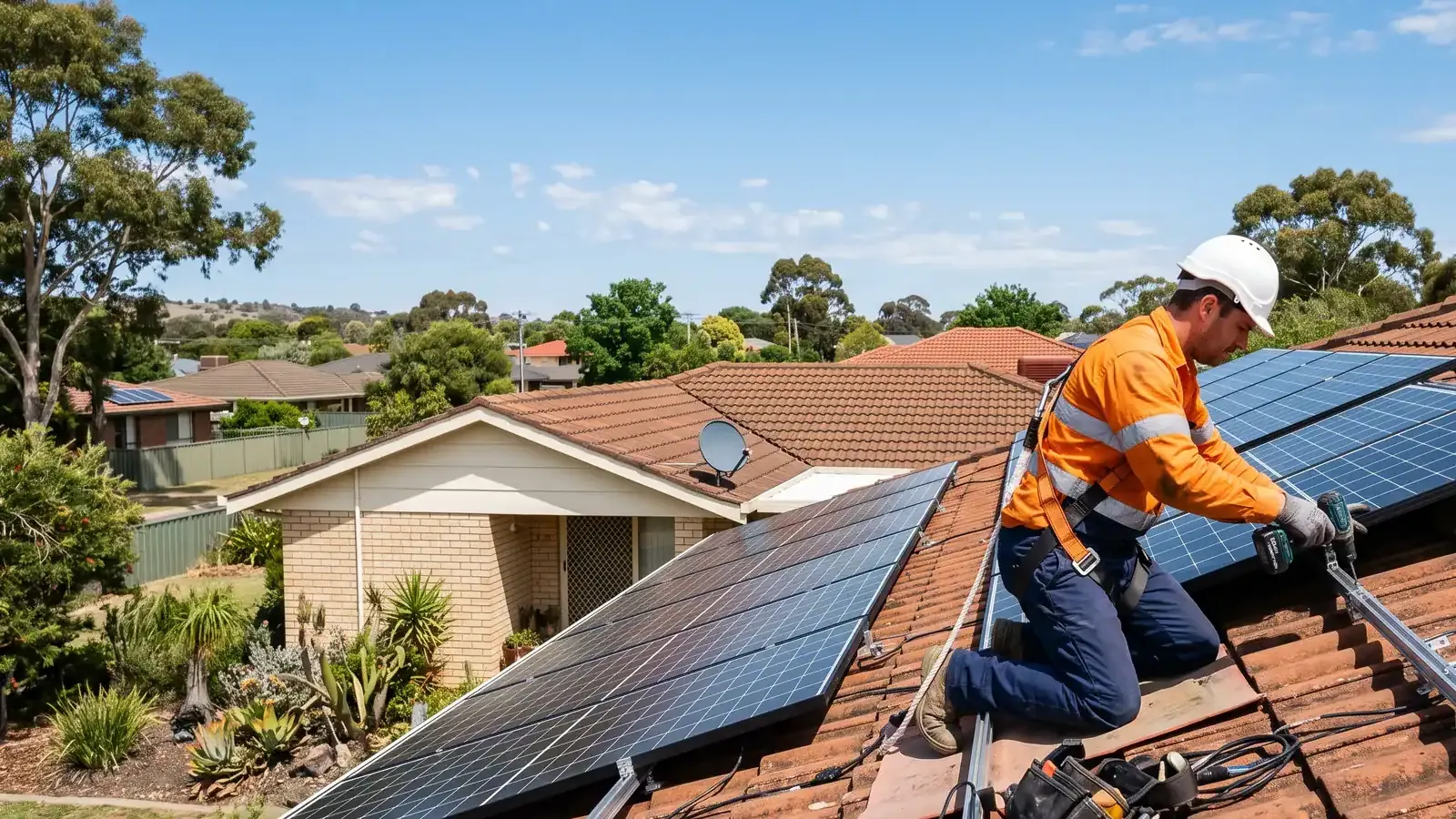
Port Macquarie gets over five hours of peak sunlight per day, making solar panels a straightforward win for local homeowners.
Nearly half the homes in the 2444 postcode already have panels on their roof. If you're thinking about joining them, this guide covers what size system suits a Port Macquarie home, what you'll pay after the government rebate, and how to pick an installer you can trust.
SolaXs has been installing solar across the Mid North Coast for over 25 years. We put this guide together based on what local homeowners ask us every week.
Looking for solar installation in Port Macquarie? Check out our Port Macquarie solar page or browse our residential solar installation services. Contact SolaXs for a free quote.
Is Port Macquarie Good for Solar Panels?
Port Macquarie sits at 31.4°S on the Mid North Coast. Bureau of Meteorology data shows an average of 5.25 to 5.5 peak sun hours per day across the year. That puts it ahead of Sydney and well above Melbourne for solar output.
What this means in practice:
- A standard 6.6kW system on a north-facing roof generates roughly 25 to 28 kWh per day on average
- Even in winter, most households produce enough to cover daytime loads
- The mild coastal climate means panels don't overheat like they do inland, which actually helps efficiency
Around 48% of homes in the Port Macquarie postcode already have rooftop solar, with over 7,200 small-scale systems installed according to Clean Energy Regulator postcode data.
What Size Solar System Do Port Macquarie Homes Need?
The average system installed locally is 5.98kW according to Clean Energy Council survey data. The right size depends on your electricity usage.
Here's a rough guide:
- Low usage (10 to 15 kWh/day): A 5kW system handles this comfortably
- Average usage (20 to 25 kWh/day): A 6.6kW system is the most common size nationally and the sweet spot for most homes
- High usage (30+ kWh/day): A 10kW system or larger makes sense, especially if you're planning a battery or EV charger
Check your quarterly electricity bill for daily usage figures. Most retailers list this on page one.
SolaXs offers free on-site assessments to match your system size to your actual consumption. Contact us to book.
Solar Panel Costs in Port Macquarie
Pricing varies depending on system size, panel brand, and inverter quality. After the federal STC rebate, here's what the market typically looks like in Port Macquarie:
| System Size | Typical Cost After Rebate |
|---|---|
| 5kW | $3,500 to $5,500 |
| 6.6kW | $4,200 to $6,800 |
| 10kW | $6,500 to $10,000 |
| 13.2kW | $8,500 to $13,000 |
Prices are approximate market guides only and vary by roof type, panel brand, and installer. Contact SolaXs for an accurate quote.
The biggest factor in price differences is usually the inverter. A string inverter from Goodwe costs less than a Fronius Primo, but both are solid choices for residential systems.
Panel brands like Canadian Solar and Jinko are popular in this region and offer strong product warranties. For a detailed breakdown, see our guide on solar panel costs in Port Macquarie.
How the Government Solar Rebate Works
The federal Small-scale Technology Certificate (STC) scheme is the main financial incentive for solar in Australia. Port Macquarie falls in STC Zone 3 with a deeming factor of 1.382, as listed by the Clean Energy Regulator.
Here's how it works:
- Your system earns a number of STCs based on its size, zone rating, and remaining deeming years
- Each STC is worth approximately $39.90 (check the Clean Energy Regulator STC price page for the latest figure)
- Your installer claims the STCs and applies them as an upfront discount on your quote
- A 6.6kW system in Port Macquarie typically generates around 90 to 95 STCs, worth roughly $3,600 to $3,800 off the install cost
The STC scheme reduces each year and is legislated to run until 2030. Installing sooner means more certificates and a bigger discount.
Feed-In Tariffs in NSW
NSW does not set a mandatory minimum feed-in tariff. What you receive for exported solar electricity depends on your retailer, and rates range from 0c/kWh to around 12c/kWh according to energy.gov.au.
What matters for Port Macquarie homeowners:
- Self-consumption saves more. Using your solar directly avoids buying grid power at 30 to 35c/kWh. Exporting earns you far less.
- Time-of-use plans can boost the value of solar if your retailer offers higher feed-in during peak periods.
- Adding a battery lets you store daytime solar for evening use instead of exporting at low rates. See our battery storage options for details.
For more ways to get value from your system, see our guide to maximising your energy savings with solar.
How to Compare Solar Installers in Port Macquarie
Three quotes sitting on the kitchen table, all different prices, and no clear way to tell which is the better deal. Here's what to check:
- CEC accreditation. Every installer must hold current Clean Energy Council accreditation to claim STC rebates. Ask for their number and verify it.
- Who does the install? Some companies sell the job then subcontract it out. Ask whether their own team will be on your roof.
- Workmanship warranty. Product warranties cover panels and inverters. Workmanship warranties cover the installation itself. Look for five years minimum, ideally ten.
- Local presence. If something goes wrong in two years, will they still be around? A Port Macquarie-based installer is easier to reach than a Sydney company sending a crew up the highway.
- Monitoring setup. A good installer connects WiFi monitoring so you can track output from your phone. If production drops, you'll know straight away.
SolaXs is CEC accredited, locally based in Port Macquarie with a 25-year track record, and uses their own team for every install.
Does Roof Direction Affect Solar Panels in Port Macquarie?
North-facing panels produce the most energy across the day at this latitude. But plenty of Port Macquarie homes have east-west roof lines, especially in newer coastal estates.
Here's what to expect:
- North-facing: Maximum output. Ideal tilt angle is around 31 degrees for this latitude.
- East-facing: Produces more in the morning. Roughly 9% less total output than north, based on SolarQuotes technical modelling.
- West-facing: More afternoon production, which can align better with evening usage. Also around 9% less than north.
- East-west split: Spreading panels across both sides gives a flatter production curve, which can actually increase self-consumption.
Low-pitch or flat roofs (common on modern coastal homes) can use tilt frames to optimise the angle. Your installer should model your specific roof layout before recommending panel placement.
Grid Export Limits in Port Macquarie
One thing most solar guides skip is export limits. Essential Energy manages the grid across the Mid North Coast, and some streets in Port Macquarie have voltage constraints that cap how much power you can send back.
What this means in practice:
- Even with a 10kW system, your inverter may be export-limited to 5kW on certain feeders
- This does not reduce how much solar you use in your home, only what goes back to the grid
- If you have a battery, stored energy is not affected by export limits
Your installer should check export limits with Essential Energy before finalising your system design. A larger system can still make sense even with export limits if your daytime usage is high or you plan to add a battery later.
SolaXs checks local grid capacity as part of every quote so your system is sized for both your home and your street. Get a free quote to find out what applies to your address.
Worth Adding a Battery?
Battery storage is becoming a common add-on for new solar installs on the Mid North Coast. With low NSW feed-in tariffs, storing daytime solar to use at night makes financial sense for many households.
The federal battery rebate offered up to $330 per kWh of storage capacity in mid-2026, following the May 2026 taper. This amount continues to reduce, so check the Clean Energy Regulator or contact SolaXs for the latest figure.
A typical 10kWh battery from a brand like BYD adds roughly $8,000 to $12,000 after available rebates. Whether it stacks up financially depends on your evening usage, feed-in rate, and whether you want backup during outages.
SolaXs can assess battery suitability as part of your initial solar quote or as a later solar system upgrade. Check out our residential battery storage services for more detail.
Solar Panels Port Macquarie FAQ
How much do solar panels cost in Port Macquarie after the rebate?
Market pricing for a standard 6.6kW system in Port Macquarie typically ranges from $4,200 to $6,800 after the STC rebate. Prices vary by panel brand, inverter choice, and roof complexity. Get multiple quotes and compare what's included.
What size solar system do most Port Macquarie homes need?
The local average is just under 6kW. Most three to four bedroom homes do well with a 6.6kW system, which balances daytime production with typical household consumption. Check your electricity bill for daily usage to size it accurately.
How many peak sun hours does Port Macquarie get?
Port Macquarie averages 5.25 to 5.5 peak sun hours per day across the year, based on Bureau of Meteorology data. This is well above the national average and means strong solar production year-round.
What is the feed-in tariff in Port Macquarie?
NSW has no mandatory minimum feed-in tariff. Your retailer sets the rate, and offers range from 0c to around 12c per kWh. Self-consumption is almost always more valuable than exporting.
How do I choose a good solar installer in Port Macquarie?
Check for current CEC accreditation, ask whether their own team does the install or if it's subcontracted, and compare workmanship warranty length. A locally based installer with a long track record is easier to reach if you need support down the track.
How long does solar installation take?
From signing the contract to switch-on, most residential installs in Port Macquarie take two to four weeks. The physical installation is typically done in a single day. Grid connection approval from Essential Energy can add a week or two.
Will solar panels work on an east or west-facing roof?
Yes. East and west-facing panels produce roughly 9% less total output than north-facing, but still generate strong returns in Port Macquarie's sunny climate. An east-west split can actually improve self-consumption by spreading production across morning and afternoon.
Is it worth adding a battery to my solar system in Port Macquarie?
It depends on your evening usage and feed-in rate. With NSW feed-in rates sitting well below retail electricity prices, a battery lets you use your own solar at night instead of buying from the grid. Households with high evening consumption or those wanting blackout backup tend to see the strongest return.
Get Started with Solar in Port Macquarie
Port Macquarie is one of the strongest solar markets on the Mid North Coast, with excellent sun exposure and a mature local installer base. The STC rebate still offers meaningful savings, but the discount reduces every year.
SolaXs offers free on-site assessments across Port Macquarie and the wider Mid North Coast. Get in touch to find out what system suits your home.